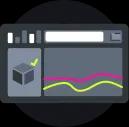
CPU and RAM priority

Boost FPS to improve in-game performance

Boost FPS is NoPing's performance layer for improving game smoothness on Windows. It helps your computer prioritize the match instead of wasting resources on secondary processes.

Boost FPS

FPS
18012060Frames per secondBeforeBoost on
FPS184
1% low142
Frame time5.4ms

Low FPS: when the bottleneck is your computer

FPS is the number of frames displayed per second. When it drops, the image stutters, input feels heavy and quick actions become harder to control. This problem starts on the computer: CPU, GPU, memory, background processes, temperature and system settings can all limit smoothness even when your internet is stable.

NoPing's Boost FPS was built for this local performance scenario. It isn't a ping fix or a packet loss fix; those layers still depend on routing and connection stability. Here the goal is to free up Windows headroom so the game gets more priority and runs with fewer sudden drops.

Resource priority for the running game

During a match, many processes compete for CPU, RAM and system access. Browsers, updaters, background services, overlays and open apps can consume resources that would make a difference in heavy scenes. Boost FPS reduces that waste by limiting or closing non-essential tasks and prioritizing the active game.

The improvement usually shows up during combat, intense visual effects, map loading and areas crowded with players. With less competition for resources, the computer can hold steadier frames and respond better to commands.

This optimization pairs well with NoPing's other layers. A fast route with unstable FPS still feels bad; likewise, high FPS with packet loss keeps hurting the match. The ideal gain comes when local performance and the connection work together.

How to enable Boost FPS without masking a network problem

Use Boost FPS when the game drops frames, freezes in specific scenes, is slow to respond to mouse or keyboard, or gets worse when many apps are open. Before testing, close downloads, restart the game under similar conditions and keep the same graphics settings for a fair comparison.

If the problem is your character snapping back to a previous position, shots that don't register or the server dropping, investigate packet loss, ping spikes or disconnection. If the image stutters even in training, a heavy menu or a local match, the bottleneck tends to be the computer. Separating these symptoms keeps you from treating network lag as if it were just a lack of FPS.

For a cleaner result, enable NoPing before the game, turn on Boost FPS and run a match or benchmark on a known section. Avoid changing resolution, graphics preset and refresh rate in the same test, because that makes it hard to know what actually improved.

How to measure smoothness, 1% low and stability

The most visible metric is average FPS, but it doesn't tell the whole story. The 1% low shows the worst drops and helps you understand whether the match stays smooth in critical moments. A game with a high average but heavy drops can feel worse than one with a lower average and steadier frames.

Use the NoPing panel, the game's own tools and the practical feel of responsiveness to compare. Watch CPU, RAM, GPU usage and temperature, because overheating or memory saturation can drop frames even after you close processes.

The expected result is less stutter, lighter input and steadier frames during the match. Boost FPS doesn't push past your hardware's physical limits, but it removes system interference and helps your computer dedicate more resources to what matters at that moment: the game.

Resource priority

Game gets the headroom

CPU78% Game
RAM71% Game
GPU84% Game
Game Background

Frame stability

Average vs 1% low

96
41
Before
+92%184
+246%142
Boost on
Average 1% low