

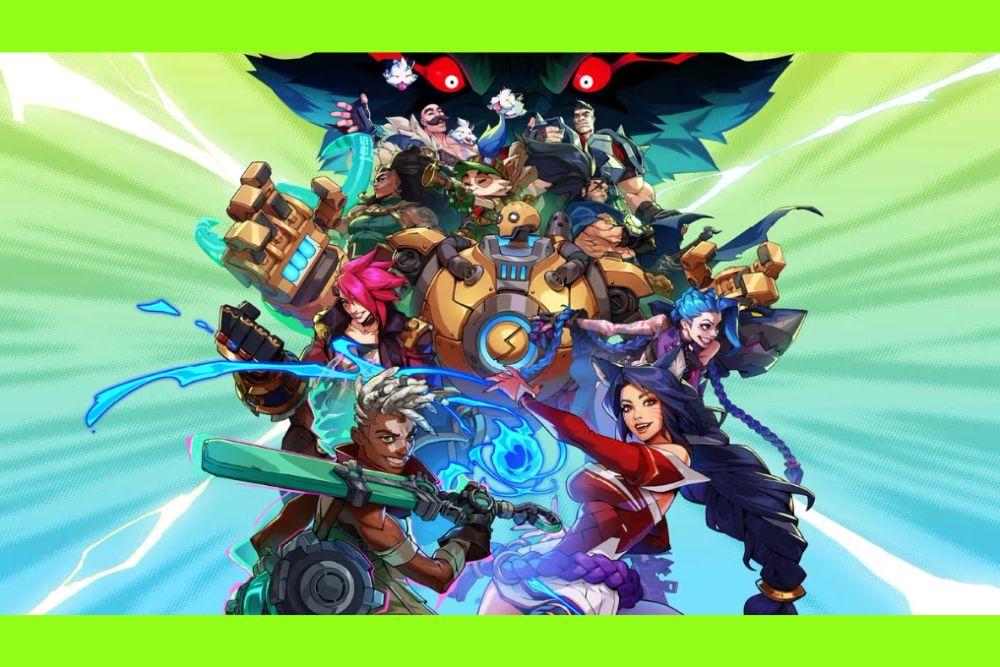
2XKO is Riot Games’ new fighting game, a 2v2 tag-team fighter that reimagines League of Legends champions for fast, team-focused matches.
If you’ve been following Riot’s experiments outside of the MOBA space, 2XKO (formerly Project L) is their clearest step into the fighting-game arena: it’s built around duo play, short matches, and a live-service cadence that looks to support competitive and casual players alike
Riot positions the game as playable at many skill levels while also supporting the fighting-game community (FGC) and competitive play.
What is 2XKO?
2XKO is a free-to-play, team-based fighting game where two players (or one player controlling both characters solo) field a duo of champions from the League of Legends universe.
Matches emphasize tag-team mechanics, assists, and cooperative sequencing between your two selected fighters.
The game borrows thematic and aesthetic elements from League and Arcane but translates champion abilities into movesets designed specifically for a fighting-game format.
Riot describes it as a tag-team fighter with an emphasis on accessibility and depth

Where Can I Download 2XKO?
For now, download and beta access are handled through Riot’s official 2XKO site and the game’s beta signup pages.
Riot has published a PC beta/download page and a beta sign-up portal where interested players can register for closed tests.
The initial tests and early access windows have been concentrated on Windows PC, with consoles (PlayStation 5 and Xbox Series X|S) listed as supported platforms for broader launches.
If you want to try it as soon as you can, the official 2XKO site is the place to sign up for beta or early access invites.
What's The Release Date?
Riot has not committed to a full retail “launch” date beyond stating the game is planned for release sometime in 2025.
What is concrete is the early access timeline: Riot moved from closed beta into an early access phase in early October 2025, with early access beginning October 7, 2025 after a short closed-beta period in September 2025.
That quick progression from beta to early access was publicly announced by Riot and reported by multiple outlets as testing validated matchmaking, servers and stability.
Keep an eye on Riot’s official channels and the 2XKO site for further updates about the full launch schedule.
Platforms
2XKO will be available on PC, PlayStation 5, and Xbox Series X|S. Riot Games confirmed full cross-play and cross-progression support across all platforms, meaning players can switch between PC and console without losing progress or cosmetics.
The game is being built with rollback netcode to ensure smooth online play across regions and devices, a key feature for modern fighting games. While early access and testing phases have been primarily focused on PC, console betas are planned closer to the full launch in 2025.
There are no current plans for PlayStation 4, Xbox One, or Nintendo Switch versions, as Riot’s focus is on current-generation hardware and performance parity across platforms. Players will access 2XKO through Riot’s own launcher on PC and through the PlayStation and Xbox digital stores on consoles.
Also read: How to Fix High Ping in League of Legends
How is the Gameplay?
The gameplay in 2XKO aims to blend familiar fighting-game systems with new twists to emphasize teamwork, tag-plays, and assist synergies.
It’s built so that matches feel dynamic, fast, but also tactical. You’ll see moments of flashy combos, but there’s also strategy in when and how you tag, assist, and use your Fuse to turn the tide.

Here are the key pillars and mechanics of how it plays out:
Tag System, Assists, & Roles
- Point & Assist roles: Each team has two champions: one is the Point (the active character fighting on screen) and the other is the Assist (off-screen until called). Players can swap these via a tag.
- Separate health bars: Point and Assist each have their own health. When the Point gets knocked out (their health bar depletes), the Assist automatically becomes the Point, so the fight continues until both are defeated.
- "Last Stand" for knocked-out allies: Even if your partner is knocked out, they’re not totally out of the match, there’s a once-per-round off-screen move (Last Stand) they can use to impact things.
Tag Actions & Assist Controls
This is where the timing and mix-ups come in:
- Assist Actions: While your Assist is off-screen, you can call them in to perform special moves. Each champion has two such assist actions (usually one forward/neutral + Tag, and one back + Tag; these differ per champ). Holding the Tag button while doing an Assist Action can convert it into a Charge Assist for stronger effects.
Handshake Tag: Pressing the Tag button without direction switches the Point and Assist when both are on screen. It’s your main way to swap characters to shift momentum, use different tools, or preserve health. - Dynamic Save: This is like a “combo breaker / defensive tag” mechanic. Using S1 or S2 + T (in many builds) summons the Assist to help interrupt an opponent’s combo on your Point. Even if the Assist is currently knocked out, you can still use this to break out.
Fuses & Synergy Modifiers
Fuses are modifiers you pick before the match that significantly affect how your team plays.
They are a major part of the decision layer, not just visual or minor tweaks. They shift pacing, risk, and strategy.
Some example Fuses:
- Double Down: Allows chaining one champ’s super/ultimate into the other’s. Great for high damage combos.
- Freestyle: Lets you do more handshake tags in one sequence, giving more flexibility to swap mid-combo or apply pressure.
- 2X Assist: Lets you call two assists instead of one under certain conditions, which helps extend combos or apply more screen control.
- Fury: A “comeback”-type fuse. Once your health gets low, you gain bonus damage and sometimes improved mobility (e.g. dash cancel). Helps make matches swingy and exciting.
- Sidekick / Juggernaut etc: There are also fuses that alter the standard tag/assist flow. For example, some reduce reliance on swapping or modify how your partner is involved.

Combo Flow, Air Juggles, Balance & Defensive Mechanics
- Combos & juggle limits: Air combos (juggles) are a thing, and there is a “juggle counter” tracking how many hits in the air. That said, there are limits to prevent infinites. This helps keep the game’s pace intact and avoid overly oppressive combos.
- Cooldowns & costs: Assist actions, especially certain ones (or using a “comeback assist”) usually come with cooldowns or meter costs. So you can’t just spam assists.
- Pushblock & defensive-tag interplay: Players have to defend smartly. For example, pushblocking or using assist / tag to escape pressure, etc. There’s tension between sticking with your point to maintain pressure vs swapping/tagging to avoid punishment.
Tactical Depth & Match Flow
- Solo vs Duo control: You can play solo controlling both characters, or you and a friend can each control one. This changes how you think about coordination. If controlling both, you manage tag timing and assists yourself; if with a partner, you’re working together.
- Risk vs reward: Many of the mechanics revolve around knowing when to burn resources (assist, tag, fuse effects) and when to play safer. Mistiming a tag could get you punished, misusing assist might leave you open.
- Match length & pacing: Compared with some tag fighters, matches aren’t instant kills. Since both characters per team have to be defeated, you usually get back-and-forth plays. That gives room for comebacks, momentum shifts.
Feel, Visuals & Readability
- The visuals aim to make what’s happening readable. Assist calls, tags, fuse triggers all have clear animations and telegraphs, so you can see when someone is going for a tag or switching in. Riot has talked about refining hit reactions etc so gameplay feels fair.
- Netcode and input responsiveness have been called out as critical. Riot is using rollback netcode to ensure that player inputs are responsive, especially important in fast tag-assist games.
Overall, the gameplay of 2XKO is best described as team-fighting fusion: it brings together tag-team action, assist strategy, champ identity, and modifiers (Fuses) that meaningfully change how you play.
Development
2XKO’s journey started inside Riot as Project L, following Riot’s acquisition of Radiant Entertainment years earlier.
Development stretches back to 2019 and has included long research-and-prototyping phases. Riot took its time iterating on systems that would translate League champions into a 2v2 fighting format.
The team behind the game includes developers with fighting-game and competitive multiplayer experience, and Riot has publicly discussed its intent to build a live-service fighter that supports ongoing seasons, content drops, and competitive infrastructure for the FGC.
Riot’s stated priorities for early access included testing server stability, matchmaking, and foundational systems like ranked and seasonal delivery.
They also plan to support cross-progression between PC and consoles, so progression and purchases carry across platforms when those versions go live.
What's the Roster?
Riot has been revealing champions gradually.
Early reveals and reporting list a roster that includes major League characters redesigned for the fighter (Ahri, Jinx, Vi, Yasuo, Darius, Ekko, Illaoi, Braum) and others (Blitzcrank and Teemo) have been shown or confirmed in various teasers and the beta builds.
Riot indicated a modest launch roster (reports referenced around 10 playable characters at or near launch) with plans to add more characters post-launch as part of seasonal updates.
Because the roster evolves with betas and seasonal content, it’s best to check Riot’s official announcements for the most current list.
The current list of characters is:
| Champion | Notes / status |
| Ahri | Confirmed and playable in early access / beta. |
| Braum | Confirmed. |
| Darius | Confirmed. |
| Ekko | Confirmed. |
| Illaoi | Confirmed. |
| Jinx | Confirmed. |
| Yasuo | Confirmed. |
| Vi | Confirmed — added to roster before or during beta / early access period. |
| Blitzcrank | Confirmed in roster listings. |
| Teemo | The 10th character |
| Warwick | The 11th character |

More about Fuses
Fuses are one of the game’s signature systems. Riot describes Fuses as mechanics that influence assists and partner interactions.
In practice, they’re designed to modify how your two champions combine during play and create strategic choices around tagging and team composition.
There’s both a mechanical purpose (how assists work, how combos extend) and a design purpose (creating counterplay and variety in team builds).
Riot’s official materials and early access notes highlight Fuses as a core way to make duo interactions feel meaningful rather than just cosmetic.
Season Updates
Riot intends to treat 2XKO as a live service.
That means seasons, balance patches, new champions, and cosmetic drops over time.
During early access and Season 0 content windows Riot and partners released patch notes and balance updates to tune the meta and introduce seasonal systems like battle passes and rewards.
The early access period is explicitly being used to refine those systems and confirm that progression and content delivery pipelines work as expected.
Expect a cadence similar to other live-service games: periodic character additions, balance patches, and seasonal themes.
Are There Any Official Competitions Yet?
Riot has expressed an intention to support competitive play and the FGC.
During early access Riot talked about building a competitive ecosystem that can support ranked seasons and tournaments.
At the time of early access, Riot’s immediate focus was functionality for ranked systems and stability; formal, large-scale official tournaments will likely follow once ranked and matchmaking are stable and the player base is at a scale that supports competitive circuits.
For now, expect community-run events and early tournament experiments; Riot typically expands tournament support as a game’s competitive scene matures.

Also read: League of Legends at EWC 2025
FAQ - all about 2XKO
Q: Will my progress carry over between PC and console?
A: Riot announced plans for cross-progression between PC and consoles, meaning that when console versions are available your account progress should be transferable across platforms. Early access initially focused on PC, so full cross-platform progression is a future state tied to console releases.
Q: Is 2XKO on Steam?
A: Riot distributes many of its games through its own launchers and storefronts. For 2XKO, Riot has been running beta sign-ups and downloads through the official 2XKO site. There is no confirmed, permanent Steam storefront page announced at the time of early access news; check Riot’s official site for any storefront announcements.
Q: Controller support and input options?
A: Riot has stated the game will be on consoles and PC, and they are delivering on platforms “where fighting game players play today” — that implies controller support is part of console and PC plans, but exact controller and input mapping details depend on final builds and platform builds. Expect native controller support, and likely robust keyboard/controller options for PC.
Q: Will there be a single-player campaign or PvE?
A: 2XKO’s core emphasis is PvP tag-team fighting. Riot’s public materials focus on multiplayer modes, ranked play, casual matchmaking and progression. If Riot adds PvE modes or extended single-player content, they will announce it; as of early access, the focus is competitive and casual PvP.
Q: How many characters at launch?
A: Reports around the closed beta and early access suggested around 9–10 playable characters near launch, with more planned post-launch. Riot’s official reveals and patch notes are the definitive source as the roster grows.
If you like fighting games and you’ve ever wanted to see League of Legends champions in a tag-team fighter, 2XKO looks like the first Riot attempt that takes the FGC seriously while trying to keep the experience approachable to a broader audience.
Play more than 3000 games without lag! Download NoPing now and start your free trial!