

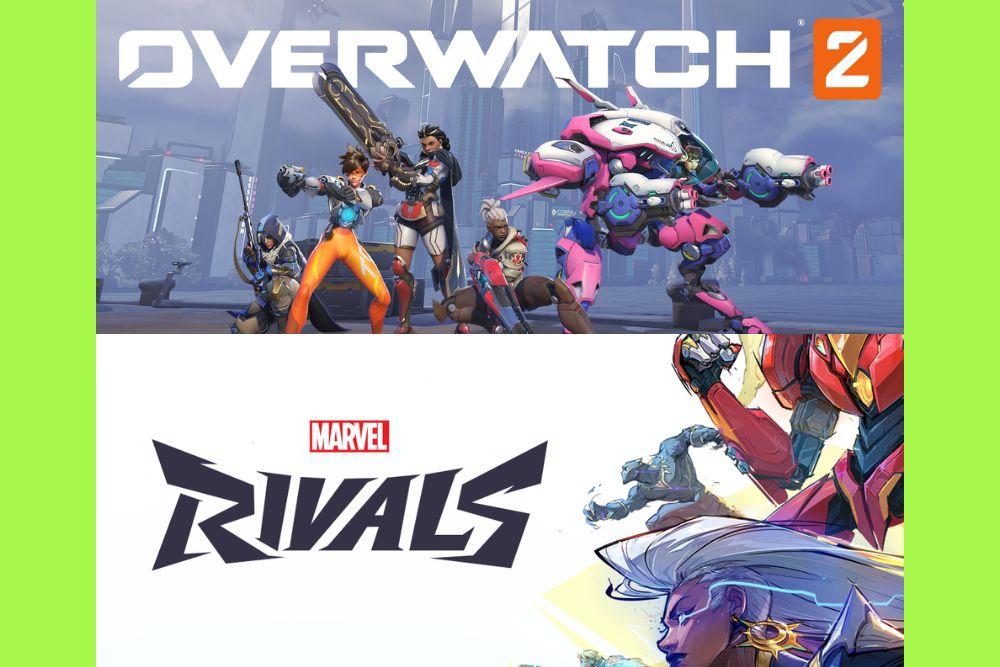
If you like team-based shooters with colorful characters, big abilities, and a community that fiercely debates balance, you have probably spent time with Overwatch or at least seen the clips.
More recently, Marvel Rivals arrived on the scene as a fresh, free-to-play hero shooter built around Marvel characters.
Both games aim for the same sweet spot - tense, empowered skirmishes where character identity matters as much as aim - but they go about it in different ways.
Below I compare Marvel Rivals vs Overwatch across gameplay, roster, player base, content and updates, balancing, and visuals and sound.
Quick context and release notes
Marvel Rivals launched as a free-to-play hero shooter from NetEase Games in collaboration with Marvel Games.
The main release for modern consoles and PC happened on December 6, 2024, with a later PlayStation 4 release in 2025.
Overwatch evolved from Blizzard’s original Overwatch into Overwatch 2, which refocused the series on seasonal live service, PvP modes, and cross-platform play.
Overwatch 2 continues to be updated by Blizzard with seasonal content and frequent patches.
Gameplay: pace, modes, and the feel
Gameplay is where you decide if a game clicks or not, and both titles lean into hero identity, but they differ in pace and mechanical emphasis.
Marvel Rivals
Marvel Rivals is a third-person hero shooter built on Unreal Engine 5. It emphasizes flashy, often vertical movement and cinematic ultimates that feel like playing a comic-book fight.
Matches commonly involve teamfights with big cooldown-driven abilities, plus objectives that push coordination. The camera and controls lean toward a more arcade, cover-and-skills style than pure aim-and-precision.
That makes it approachable for players who prefer ability-driven gameplay over strict aim requirements.

Overwatch
Overwatch is primarily a first-person hero shooter (Overwatch 2 kept that perspective) with a strong focus on aim, positioning, and real-time ability management. Matches reward consistent mechanical skill as much as game sense.
Overwatch’s abilities are punchy, but the first-person view and map design place more weight on aiming and micro-movements.
Overwatch’s objective types - push, capture points, and control - encourage composition and rotation that reward small, repeatable mechanical advantages.

Bottom line: if you want MP fights that feel like playing a blockbuster comic with dramatic set-pieces and more forgiving aiming, Marvel Rivals leans that way. If you want a first-person, aim-heavy tactical dance with tight spacing and fundamentals, Overwatch is the staple.
Roster: characters, variety, and identity
One core appeal of both games is their cast.
Marvel Rivals
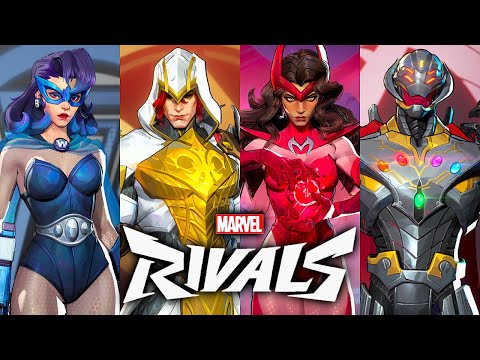
Marvel Rivals trades on the depth of Marvel IP. By late 2025 the game had a roster counting dozens of Marvel figures - from A-list heroes like Iron Man, Invisible Woman, and Black Panther to fan-favorites and quirky additions like Jeff the Land-Shark.
There are 44 characters with ongoing seasonal additions and crossover events. The cast is arranged into categories so each hero plays a distinct role during fights.
Overwatch
Overwatch’s hero roster is built on Blizzard’s original world and characters. As of late 2025 Overwatch 2 lists about 40 to 45 heroes across Tank, Damage, and Support roles.
Each hero is designed around a set of abilities that create well-known archetypes - brawlers, flankers, anchors, healers - and Blizzard has steadily grown and tuned this roster since launch.

Variety comparison: Marvel Rivals' roster stands out because each character comes with a brand and a cinematic power fantasy tied to Marvel lore.
Overwatch makes diversity through design - distinct mechanical archetypes and unique utility - and its heroes have decades of tuning and meta history behind them.
If you want to play your favorite Marvel IP in an online match, Rivals is the obvious draw. If you want tight, well-defined hero roles after years of iteration, Overwatch has deep legacy value.
Player base: numbers and trends
Raw player numbers are noisy, but they give a sense of scale.
Marvel Rivals
Steam and public metrics show Marvel Rivals had strong peaks in early 2025 and has maintained hundreds of thousands of monthly players at times.
Recent monthly averages and Steam-tracked stats indicate tens of thousands of daily players with periodic spikes during seasonal events.
For example, SteamCharts and SteamDB report monthly averages and peaks throughout 2025 indicating substantial but variable activity.
Overwatch
Overwatch 2 remains one of the more consistently played hero shooters with millions of total players globally.
Estimates of daily active users are in the millions, and Blizzard’s cross-platform presence and esports ecosystem keep Overwatch visible and regularly played.
SteamDB shows active Steam players in the low tens of thousands at any given moment, but platform-wide numbers are much larger thanks to console players.
Overwatch 2 is the larger, more entrenched property globally, with a broader installed base across consoles and PC.
Marvel Rivals has demonstrated it can draw big spikes and keep a healthy audience, especially during seasons and major promotions, but its player numbers are more event-driven and fluctuate more.
Content and updates: pace, seasons, and live service
Both games are live-service by design, and both ship seasonal content, but their cadence and focus differ.
Marvel Rivals
Marvel Rivals has embraced seasons centered on Marvel narratives and new roster additions.
The developers have been running regular patches and season launches (for example, a Season 4 rollout and anniversary events with new modes like large-scale Annihilation), plus holiday promotions and cosmetic drops.
Patch notes and the official site show regular updates through 2025 with new characters, maps, and events.
Overwatch
Overwatch 2 uses a seasonal model with hero updates, skins, events, and reworks. Blizzard publishes regular patch notes covering balance, bug fixes, and limited-time events.
Seasons for Overwatch often include new cosmetics, battle passes, and occasional new heroes or reworks.
Blizzard’s long-term roadmap and esports-related events keep content flowing on a predictable cadence.
Which feels better? Marvel Rivals leans heavily on Marvel IP as content driver - characters and story-driven seasons.
Overwatch 2 relies more on iterative balancing, seasonal cosmetics, and a stable parade of community-driven events. If you value rapid hero additions and Marvel-themed events, Rivals may feel more exciting; if you prefer a steadier, esports-friendly rhythm with longer-term tuning, Overwatch’s approach is dependable.
Balancing: philosophy and practice
Balancing hero shooters is fundamentally political and iterative. Both studios publish patch notes and shift numbers regularly, but their approaches show differences.
Marvel Rivals
NetEase for Marvel Rivals is actively tuning heroes through frequent patches and balance updates, sometimes tied to seasons.
Because Rivals is newer and its roster grows fast, balancing often involves larger swings to accommodate new hero interactions and to keep high-profile Marvel abilities feeling impactful.
The studio has posted balance-focused patch notes through 2025.
Overwatch
Blizzard’s balancing of Overwatch 2 benefits from a long history of competitive play and public testing.
Blizzard has built a cadence of smaller, surgical adjustments, and reworks are given more time and testing.
Overwatch’s balance philosophy often emphasizes role parity and predictable counters, because the game's competitive scene relies on that stability.
Patch notes show both bug fixes and design shifts aimed at competitive parity.
Reality check: new hero introductions in either game temporarily disrupt balance. Marvel Rivals tends to see more volatility because the roster and power fantasies are refreshed aggressively.
Overwatch’s tuning is steadier but still reacts sharply when a hero dominates certain play levels.
Visuals and sound: polish, identity, and audio design
Both games are polished, but their artistic goals differ.
Marvel Rivals
Marvel Rivals is powered by Unreal Engine 5 and leans into a cinematic comic-book aesthetic.
Character models are often faithful to Marvel designs, with flashy VFX and loud, thematic ultimates.
The sound design and musical cues aim to feel heroic and big, matching the spectacle of playing a Marvel character.
Recent trailers and season reveals emphasize high-fidelity models, costumes, and spectacle.
Overwatch
Overwatch’s visual identity is cartoony but crisp, with clear silhouettes and readable abilities.
Blizzard has always prioritized readable visual design so that gameplay cues are clear in the heat of combat.
Overwatch’s sound design is also tuned for clarity - footsteps, ability cues, voice lines - to communicate gameplay information while enriching character personality.
The aesthetic is stylized rather than hyper-realistic, which supports accessibility and long-term readability.
If you want cinematic Marvel spectacle, Rivals leans that way. If you prefer design that prioritizes gameplay clarity and readable fights under pressure, Overwatch nails it.
Community and competitive scenes
Overwatch has a mature competitive ecosystem with a history of esports leagues, content creators, and coaching resources.
That depth fuels high-level metas and longterm community knowledge. Marvel Rivals is newer but has active streamer engagement, seasonal contests, and community events that spike interest around new seasons or collaborations.
NetEase has pushed creator streams and promotional events to grow visibility.
For players who love a deep competitive ladder and tons of guide content, Overwatch has the advantage. For players who want fresh Marvel narratives and spectacle-driven content that’s social and streamer-friendly, Rivals is attractive.
Monetization and cosmetics
Both games are free-to-play and monetize chiefly through cosmetics, battle passes, and seasonal bundles.
Marvel Rivals leans into character costumes and Marvel-branded cosmetics tied to seasons and movie tie-ins.
Overwatch 2 sells skins, battle passes, and limited-time bundles; Blizzard’s long history with high-end cosmetics and events informs their approach.
Recent Marvel Rivals promotions include anniversary discounts and curated packs, which drive revenue around seasons.
Which should you play?
There is no absolute winner. Pick based on what you want to feel every match.
- If you want to play as Marvel characters, enjoy cinematic ultimates, and prefer a third-person, ability-forward shooter with frequent seasonal shake-ups, try Marvel Rivals. It delivers a superhero fantasy and is actively expanding its roster and modes.
- If you value first-person precision, tight mechanical depth, a mature competitive ecosystem, and decades of balance iteration, Overwatch 2 is the safer bet. It has a broad, global player base and a design philosophy optimized for clarity and competitiveness.
Both games are live services, so your experience will depend on which characters you enjoy, how much you like seasonal content, and whether you favor spectacle or precision.
If you have a soft spot for Marvel lore and want big, dramatic moments, Rivals will scratch that itch.
How to play Marvel Rivals and Overwatch without lag?
NoPing is a service designed to optimize your route to Marvel Rivals and Overwatch servers. Sometimes, the normal path your internet provider uses isn’t the fastest. NoPing reroutes your data through a better, more direct path.
Here’s how to use NoPing to fix network issues in Marvel Rivals and Overwatch:
- Sign-up through the website and download NoPing (you can try it for free)
- Open NoPing and search for Marvel Rivals or Overwatch inside the software
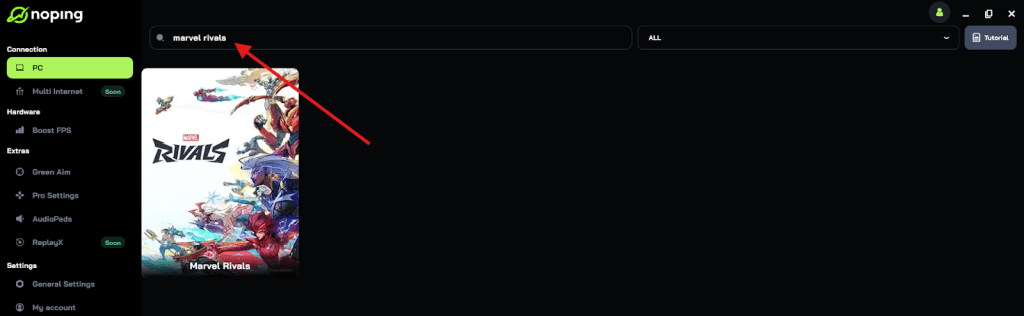
- Once you find the game, click on it. Choose your server on the next screen and click on “Optimize Game”.
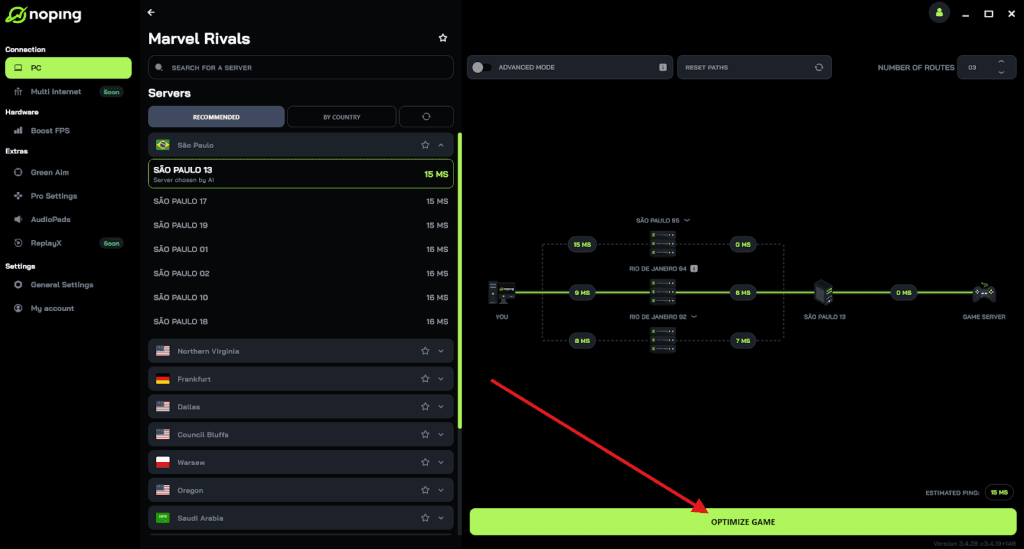
- And that’s it, you can start playing Marvel Rivals or Overwatch with optimized ping!
You can test different servers within NoPing to see which gives you the lowest latency.