

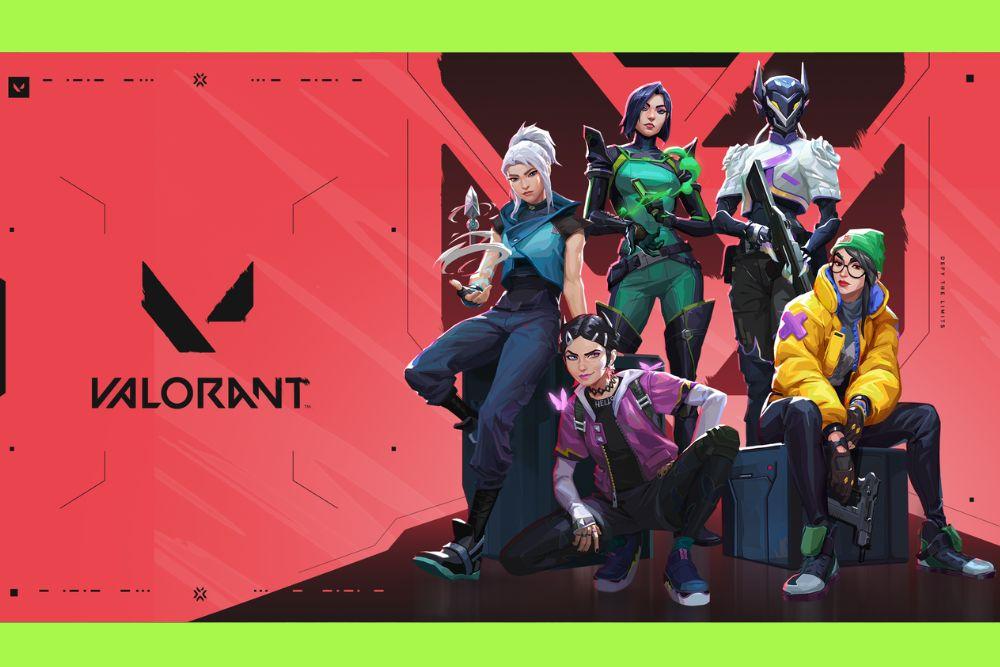
Valorant release date was June 2, 2020, and it completely shifted the landscape of tactical shooters for years to come.
While most of the world was stuck indoors during the early months of the decade, Riot Games dropped a bombshell that combined precise gunplay with expressive character abilities.
It was a bold move; taking on established giants like Counter-Strike was no small feat. But here we are in 2026, and the game has grown from a mysterious project into a global phenomenon that spans PCs, consoles, and even mobile devices.
The journey from a secret prototype to a leading esport is a wild one.
If you are curious about how this tactical shooter became the powerhouse it is today, you are in the right place.
We are going to dive deep into the timeline, the major updates, and the technical milestones that define the Valorant experience.
When did Valorant come out?
Valorant officially launched on PC on June 2, 2020.
Before this global rollout, the game spent several months in a highly exclusive closed beta that started on April 7, 2020.
The launch was a massive event for Riot Games, marking their first major departure from the League of Legends universe.
The launch version of the game, known as Episode 1: Ignition, featured:
- 11 original agents (including the launch day addition of Reyna).
- 4 maps (Bind, Haven, Split, and the newly added Ascent).
- A fully functional competitive mode that arrived shortly after the June 2 launch.
While most games struggle with server stability on day one, Riot leveraged their extensive Riot Direct network to ensure that players had the lowest latency possible.
They even built new data centers in cities like London, Madrid, and Warsaw specifically to handle the influx of players.

What was the hype surrounding Project A?
The game was first teased during Riot’s 10th-anniversary livestream in October 2019 under the codename Project A.
At the time, the developers described it as a stylish, competitive, character-based tactical shooter for PC. The initial footage was intentionally blurry and early in development, but it was enough to spark a fire in the FPS community.
The team behind the game included veterans from the Half-Life and Counter-Strike scenes, which gave the project immediate credibility. They promised three things that had never been fully delivered in a single package:
- High-quality 128-tick servers for everyone.
- A custom-built, kernel-level anti-cheat system called Vanguard.
- A commitment to "tactical" gameplay where abilities compliment gunplay rather than replacing it.
On March 2, 2020, Riot finally gave Project A its real name: Valorant. They released a gameplay trailer featuring the character Phoenix on the map Haven, and the hype went through the roof.

How did the Twitch drops beta change everything?
The Valorant closed beta began on April 7, 2020, and it was arguably the most successful marketing campaign in gaming history. Instead of a traditional sign-up, Riot partnered with Twitch to distribute beta keys via "drops."
To get a key, you had to link your Riot account to Twitch and watch specific streamers play the game.
This created an unprecedented surge in viewership. At its peak, the game reached over 1.7 million concurrent viewers on Twitch, nearly breaking the record held by the League of Legends World Championship. People were desperate to get in, and for many, getting that "drop" notification was the highlight of their month.
The beta was not just for show; it was a crucial testing ground. During this period, Riot collected data on weapon balance, agent power levels, and server performance.
When the beta ended on May 28, 2020, the community was already hooked, and the countdown to the June release was on.
Milestones in Valorant’s history
The game has evolved through a system of Episodes and Acts. Each Episode usually lasts about six months, containing three Acts that last about two months each.
However, in late 2024, Riot shifted toward a seasonal content model to allow for more significant annual changes.
Here is a quick look at the major milestones that defined the game’s first few years:
- Episode 1 (June 2020): Ignition. Introduced Ascent and Reyna. The competitive ladder was established.
- Episode 2 (January 2021): Formation. Introduced Yoru and the map Icebox.
- Episode 3 (June 2021): Reflection. Introduced the robotic initiator KAY/O and the tropical map Breeze.
- Episode 5 (June 2022): Dimension. Added the underwater map Pearl and the agent Fade.
- The Console Launch (August 2024): Valorant finally broke its PC-only status and launched on PS5 and Xbox Series X/S.
- The Unreal Engine 5 Transition (2025): The game migrated from UE4 to UE5, allowing for better lighting and more detailed environmental effects without sacrificing performance.
By early 2026, the game has reached 28 agents, with Veto being the most recent addition. The map pool has also expanded to 12 active maps, each with unique mechanics like teleporting doors, ziplines, and destructible environments.
When did Valorant arrive on consoles?
For years, the idea of a tactical shooter on a controller seemed impossible because of the precision required.
However, on August 2, 2024, Valorant officially launched on PlayStation 5 and Xbox Series X/S. This followed a limited beta period that began on June 14, 2024.
Riot did not just port the game; they redesigned the experience for console players. They introduced a feature called "Focus Mode," which reduces sensitivity when aiming without needing to use a traditional ADS (Aim Down Sights).
This allowed console players to maintain the high-precision "hip-fire" feel that makes the game what it is.
One important detail to note is that there is no cross-play between PC and console players. Riot made this decision to keep the competitive integrity of both platforms intact.
However, cross-progression is fully supported, meaning your skins and unlocks follow you regardless of where you play.
What makes the technical side of Valorant special?
From the start, Riot Games focused on the "boring" stuff that actually makes a competitive game feel good.
Netcode and anti-cheat were the pillars of their development.
The 128-tick servers are a standard that many other shooters still do not offer. In simple terms, this means the server updates the game state 128 times every second.
This results in much smoother movement and ensures that when you click a head, the game registers it instantly.
Then there is Vanguard. While it was controversial at launch because of its "always-on" kernel-level access, it has proven to be incredibly effective.
In early 2025, Vanguard hit a record of "bans-per-second" during a massive cleanup of DMA (Direct Memory Access) cheats. These are hardware-level cheats that bypass standard software detection, and Riot’s proactive updates have kept the competitive queue cleaner than almost any other FPS.
How has the game engine evolved?
For the first five years, Valorant ran on a heavily modified version of Unreal Engine 4. This was great for accessibility, allowing the game to run on older hardware and "potato" PCs.
However, as technology advanced, Riot saw the need for a more robust foundation.
In 2025, the game officially moved to Unreal Engine 5. This transition was handled carefully to ensure that the minimum system requirements did not skyrocket. The main benefits were seen in:
- Global Illumination: Better lighting that makes maps feel more alive.
- Physics Improvements: More consistent interaction between agent abilities and the environment.
- Faster Development: UE5 allows the team to build and test maps more efficiently.
This move was a clear signal that Riot plans to support the game for at least another decade. They are not just coasting on their success; they are actively modernizing the game’s core.
Can you play Valorant with better ping and stability?
No matter how good the game’s servers are, your own internet connection can still be a bottleneck.
This is where optimization tools become essential. High ping, packet loss, and jitter are the enemies of any tactical shooter player.
If you are experiencing lag spikes or your shots feel like they are "ghosting" through enemies, it is usually a routing issue. Your internet service provider might be sending your data through a long, inefficient path to reach the Valorant servers.
Here’s how to use NoPing to fix lag in Valorant:
- Sign-up through the website and download NoPing (you can try it for free)
- Open NoPing and search for Valorant inside the software
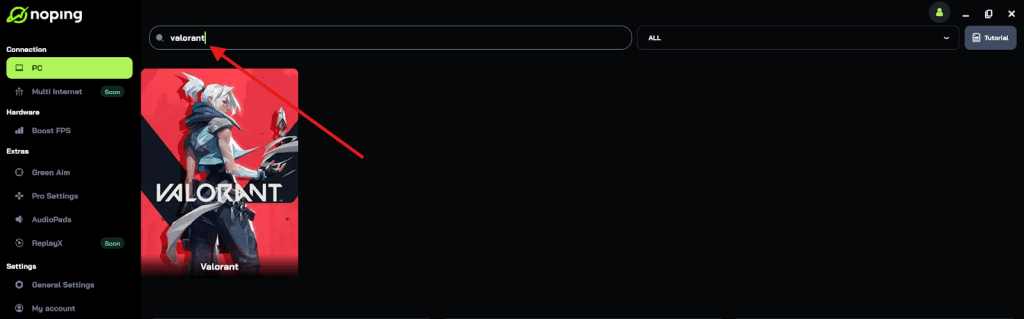
- Once you find Valorant, click on it and, on the next screen, select “Choose automatic” or “Choose manual” and click “Continue”. We recommend choosing automatic, as NoPing’s technology analyzes all routes on a global scale and automatically selects the best option for you.
- On the next screen, click on “Optimize Game”.
- And that’s it, you can start playing Valorant with optimized ping!
You can test different servers within NoPing to see which gives you the lowest latency.
Looking back at the Valorant release date and everything that has happened since, it is clear that Riot Games built something built to last.
From the chaotic Twitch drops of 2020 to the massive Unreal Engine 5 update of 2025, the game has never stopped growing. It is more than just a clone of other shooters; it is a unique ecosystem with its own deep lore, high-stakes esports, and a community that is incredibly passionate.
Whether you are a veteran from the beta days or a new player on console, the game continues to offer one of the most polished competitive experiences on the market.
With new agents and maps arriving every few months, the future of this tactical shooter looks brighter than ever.
Play Valorant without lag. Download NoPing now and start your free trial!