


Competitive gaming is the practice of playing video games with the intent to compete, either casually with friends or on the big stage in tournaments and leagues.
It covers everything from local 1v1 matches to million-dollar esports events watched by millions.
This article walks through what competitive gaming and esports are, which games and competitions matter most right now, how to get involved, how much players can earn, and practical, proven ways to improve your play.
What is competitive gaming and esports?
Competitive gaming refers to organized, rule-based competition using video games.
When those competitions scale (structured leagues, franchised teams, broadcast production, sponsors and large audiences) they’re usually called esports.
Esports includes everything from weekend grassroots cups to seasonal leagues and world championships with production values similar to traditional sports broadcasts.
Esports ecosystems typically include:
- Players (from solo competitors to five-player teams),
- Coaches and analysts,
- Organizations (teams and brands),
- Tournament organizers and publishers,
- Broadcasters and content creators.
Esports differs from casual gaming primarily by the level of structure, stakes and audience.
Competitive formats emphasize balance, measurable performance and often long-term meta-strategies that players and coaches develop over seasons.

What are the biggest competitive games?
The “biggest” games can mean different things: prize money, viewership, number of events or active pro scenes.
Recent data shows Dota 2, Counter-Strike 2, and several mobile titles rank very high by prize pool and event activity.
League of Legends remains arguably the most-watched esports event annually (Worlds), while shooters like Valorant and CS2 consistently run many high-level tournaments. Mobile titles such as Honor of Kings and PUBG Mobile also command huge prize pools and regional communities.
Here’s a table with the top 30 games from that EsportsEarnings “Top Games of 2024” list, along with their prize money, number of players, and tournaments.
| Rank | Game | Prize Money (2024) | # Players | # Tournaments |
| 1 | Dota 2 | $23,856,354.83 | 767 | 91 |
| 2 | Counter-Strike 2 | $20,857,764.41 | 2,470 | 364 |
| 3 | Arena of Valor | $19,824,248.42 | 523 | 13 |
| 4 | Fortnite | $12,351,438.74 | 1,415 | 200 |
| 5 | League of Legends | $8,700,298.79 | 1,176 | 87 |
| 6 | Rainbow Six Siege | $7,874,873.65 | 339 | 16 |
| 7 | VALORANT | $7,159,689.89 | 1,819 | 97 |
| 8 | Rocket League | $6,919,517.37 | 4,254 | 442 |
| 9 | PUBG Mobile | $6,915,713.64 | 522 | 31 |
| 10 | EA Sports FC 24 | $6,816,757.14 | 250 | 38 |
| 11 | PLAYERUNKNOWN’S BATTLEGROUNDS | $6,423,270.68 | 503 | 29 |
| 12 | Call of Duty: Modern Warfare III | $6,232,000.00 | 138 | 16 |
| 13 | Mobile Legends: Bang Bang | $5,817,758.60 | 312 | 8 |
| 14 | Apex Legends | $4,903,264.00 | 341 | 12 |
| 15 | Street Fighter 6 | $3,685,184.82 | 229 | 52 |
| 16 | Teamfight Tactics | $3,547,664.04 | 353 | 28 |
| 17 | CrossFire | $2,894,522.10 | 291 | 16 |
| 18 | Overwatch 2 | $2,765,301.92 | 509 | 30 |
| 19 | Free Fire | $2,598,900.00 | 197 | 6 |
| 20 | StarCraft II | $2,174,769.04 | 154 | 175 |
| 21 | Halo Infinite | $2,001,095.98 | 88 | 6 |
| 22 | Call of Duty: Warzone | $2,000,000.00 | 97 | 2 |
| 23 | Chess.com | $1,982,080.02 | 292 | 180 |
| 24 | StarCraft: Remastered | $1,931,673.96 | 196 | 240 |
| 25 | Tekken 8 | $1,806,651.86 | 219 | 41 |
| 26 | League of Legends: Wild Rift | $1,668,003.70 | 102 | 7 |
| 27 | Call of Duty: Mobile | $1,648,270.84 | 136 | 6 |
| 28 | Naraka: Bladepoint | $1,201,500.00 | 71 | 2 |
| 29 | World of Tanks | $1,195,144.39 | 209 | 11 |
| 30 | Clash of Clans | $1,175,000.00 | 173 | 10 |
Also read: What is the Best Monitor Size for Competitive FPS?
And the biggest competitions?
Competitive gaming now spans dozens of major events every year, with production levels rivaling traditional sports.
These tournaments are the backbone of the esports calendar, bringing together top teams, massive prize pools, and international audiences.
Here are some of the most influential competitions currently shaping the scene.
1. The International (Dota 2)
Perhaps the most iconic esports tournament, The International (often called TI) is the annual world championship for Dota 2.
Organized by Valve, it became famous for its record-breaking prize pools, often crowdfunded through in-game purchases from the Dota community. TI winners have taken home millions of dollars, with past editions exceeding $40 million in total prizes.
Beyond the money, TI is known for its emotional storytelling, grand finals atmosphere, and dramatic upsets that define the Dota scene every year.
2. League of Legends World Championship (Worlds)
The LoL Worlds is Riot Games’ flagship event and one of the most watched tournaments in all of esports. Every October, the top regional teams from North America, Europe, Korea, China, and other regions face off for the Summoner’s Cup.
Worlds combines cinematic production, live music performances, and top-tier competition, its 2023 edition drew over 6 million concurrent viewers at peak, making it the most-watched esports event ever recorded.
The event’s production value and storytelling approach have turned it into the esports equivalent of the Super Bowl.
3. Esports World Cup (EWC)
The Esports World Cup (EWC) is one of the newest and most ambitious projects in competitive gaming. Announced in 2024 and hosted annually in Riyadh, Saudi Arabia, it’s designed to become a multi-game global festival celebrating the world’s biggest esports titles under one banner.
The EWC features dozens of games across genres (MOBA, FPS, sports, and fighting) and includes a Club Championship, rewarding organizations that perform best across multiple titles.
With a prize pool surpassing $60 million in 2024, it’s currently the largest single-year payout in esports history.
Beyond the cash, EWC’s cross-game structure encourages collaboration between different gaming communities and helps smaller esports gain visibility alongside global giants like League of Legends, Dota 2, and Valorant.
4. VALORANT Champions Tour (VCT)
The VCT is Riot Games’ official global circuit for Valorant, featuring regional leagues, Masters events, and a season-ending world championship known as Valorant Champions.
The structure mimics traditional sports leagues, creating consistency and stability for professional teams.
The combination of tactical gameplay and flashy production helped Valorant’s competitive scene rise quickly.
The 2024 Valorant Champions event reached millions of concurrent viewers and confirmed Valorant’s place among the “big three” global esports ecosystems.
5. Counter-Strike Majors (CS2 Majors)
Since the early CS:GO days and now in Counter-Strike 2, the Majors have been the ultimate test for competitive FPS players.
Sponsored by Valve, each Major gathers 24 of the best teams in the world and distributes prize pools often ranging from $1 million to several million dollars.
Counter-Strike’s longevity, skill ceiling, and iconic plays, like clutch 1v5s or defuse saves, make the Majors deeply respected even outside their fan base. The return of the PGL Copenhagen Major 2024 marked the first-ever Major for CS2 and drew enormous global attention.
6. Fortnite Champion Series (FNCS)
Epic Games’ Fortnite Champion Series remains one of the most accessible yet competitive ecosystems. FNCS runs across multiple regions and platforms, offering huge online prize pools and open qualifiers that let anyone with enough skill compete.
The format’s open nature makes Fortnite unique. Players can go from unknowns to pros overnight. FNCS Finals often feature millions of dollars in prize money and global broadcast coverage across Twitch and YouTube.
7. PUBG Mobile Global Championship (PMGC)
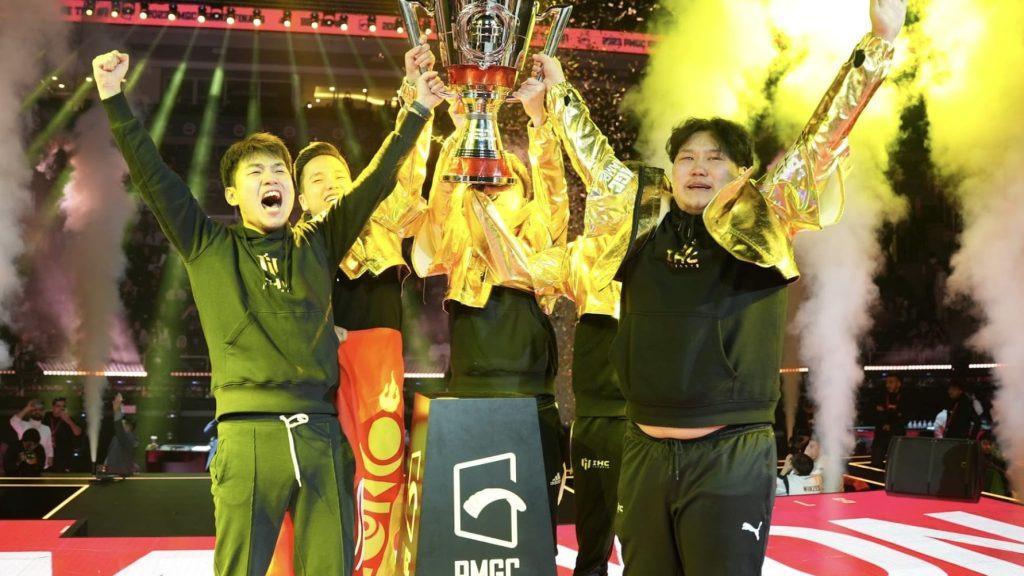
The PMGC represents the peak of mobile esports. PUBG Mobile’s professional scene is enormous, especially in Asia and the Middle East, with regional leagues feeding into this world championship.
Source: Esports Insider
Prize pools exceed $3 million, and production quality mirrors top PC events. Its success shows how mobile gaming has become a legitimate platform for competitive play, attracting huge live audiences and sponsor investment.
8. Rocket League Championship Series (RLCS)
The RLCS continues to grow thanks to its accessibility and unique gameplay, car soccer at breakneck speed. It features seasonal splits culminating in the World Championship, where the best teams compete for prestige and prize money often exceeding $2 million.
Rocket League’s mix of mechanical mastery and fast pacing makes it a consistent crowd-pleaser across both casual and competitive audiences.
9. Call of Duty League (CDL)
The Call of Duty League is a franchised circuit run by Activision Blizzard, featuring teams representing major cities (like the LA Thieves or Atlanta FaZe).
Players receive salaries, and the league culminates in the Call of Duty Championship, which determines the yearly world champion.
With strong branding and loyal fanbases, the CDL remains a mainstay of North American esports.
10. EVO (Evolution Championship Series)
For the fighting game community (FGC), EVO is the mecca. It gathers thousands of players from around the world to compete in titles like Street Fighter 6, Tekken 8, Mortal Kombat 1, and Guilty Gear.
What makes EVO special is its spirit: open brackets, passionate fans, and unforgettable “pop-off” moments. EVO isn’t just a tournament—it’s a celebration of fighting games as a culture.
Other notable events worth mentioning
- Apex Legends Global Series (ALGS) — EA’s flagship battle royale competition with regional leagues and major LAN finals.
- Mobile Legends: Bang Bang World Championships (M-Series) — one of the biggest mobile events globally, especially popular in Southeast Asia.
- Overwatch Champions Series (OWCS) — Blizzard’s revamped global format for Overwatch 2, continuing from the Overwatch League’s legacy.
- Teamfight Tactics Worlds — a growing scene for auto-battler fans, backed by Riot Games.
- Chess.com Global Championships — bridging traditional and digital mind sports through online tournaments with large prize pools.
How can you get into competitive gaming and esports?
There’s no single path, as people come from all directions, but here’s a practical ladder you can follow:
Pick a game and learn the basics
Choose one game and focus. Competitive skill tends to be deep rather than broad. Learn mechanics, maps, meta strategies, and current patch impacts. Watch pro matches and educational creators.
Master ranked play and consistency
Regularly play ranked or competitive modes. Aim for consistent improvement—track stats, identify repeat mistakes, and set micro-goals (e.g., improve crosshair placement, reaction time, decision-making in X situation).
Record, review and ask for feedback
Record your matches, review critical moments, and ask better players or coaches for feedback. Many amateur teams use Discord or community replay review sessions.
Join amateur tournaments and communities
Play in local cups, online open tournaments and community ladders. Sites like FACEIT, Battlefy and regional platforms run frequent amateur cups where players get scouted.
Build a presence
Stream, create short-form clips, and engage on social platforms. Visibility helps: many orgs sign players after seeing them play on streams or win notable amateur tournaments.
Network and trial for teams
Join team tryouts, scrim with higher-level squads, and be open to trial periods. Be professional: show up on time, communicate clearly and be coachable.
This pathway scales: casual players stick to steps 1–3; semi-pros focus on 4–6; pros add full-time practice schedules, coaches and organization trials.
How much does a competitive gamer make?
Earnings vary wildly by region, game and role.
Top players in major regions and titles can make six figures or more when salary, prize money, and sponsorships are combined.
Average salaries differ by league and title, for example regional European or North American franchise leagues often pay substantial base salaries for top-tier players, and some team payrolls reach high figures.
That said, many professional players outside the top tier earn modest incomes and rely on streaming, coaching, or part-time jobs.
There is no single “average” across all games; the reality varies by market and status within the scene.
A few concrete points from recent reporting:
- Some top regional league players (franchised leagues) can earn very high annual salaries; numbers reported for certain top leagues range from five figures to mid-six-figures by region and title.
- Prize money for major tournaments can be life-changing for winners (The International and other major events distribute multi-hundred-thousand to multi-million-dollar shares).
How to become a better player?
Improvement is a mix of practice structure, physical and mental care, and smart tech choices. Below are actionable steps.
Deliberate practice over hours logged
Focused, measurable practice beats mindless grinding. Break skills into components—aim, movement, game-sense, economy management, rotations—and practice them in short, intense sessions with clear feedback.
Review and analyze
Watch your replays looking for decisions, timing mistakes and mechanical errors. Use tools, coaches or teammates to point out patterns.

Train fundamentals daily
Warm up with aim trainers or in-game drills, practice communication, and review map timings. Small daily improvements compound fast.
Play with purpose and variety
Mix scrims, ranked, and custom games. Scrims expose you to coordinated team play; ranked pressures your decision-making.
Build a healthy routine
Sleep, nutrition and exercise matter. Reaction time and focus degrade quickly without rest.
Get coaching and high-quality feedback
One-on-one coaching or joining a team with an analyst accelerates growth. Coaches give outside perspective and structured plans.
Optimize tech and connection: use NoPing
Latency, packet loss and unstable routes can make otherwise-correct mechanical plays fail.
NoPing is a service that optimizes routes between your device and game servers, helping reduce ping and packet loss by selecting faster network paths in real time.
For competitive players, lowering latency and stabilizing the connection can meaningfully improve input responsiveness and reduce discrepancies between what you see and what servers register
NoPing also has a Boost FPS and stability improvements, multi-platform support and AI-based route calculation.
If you consistently experience high ping, jitter or frequent disconnections, an optimized routing service like NoPing can be part of a practical improvement stack.
Here’s how to use NoPing to lower your latency in competitive games:
- Sign-up through the website and download NoPing (you can test it for free).
- Open NoPing and search for your game inside the software
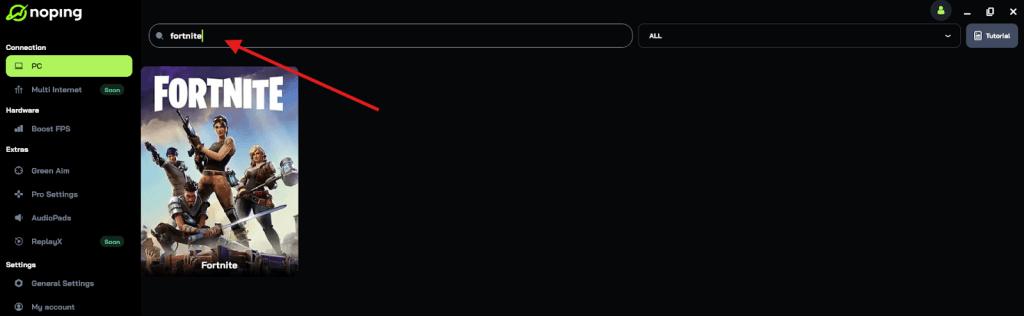
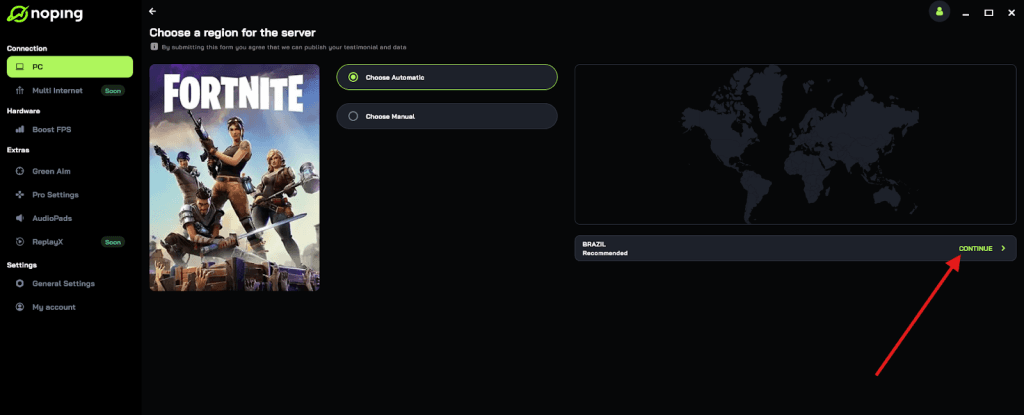
- Once you find it, click on it and, on the next screen, select “Choose automatic” or “Choose manual” and click “Continue”. We recommend choosing automatic, as NoPing’s technology analyzes all routes on a global scale and automatically selects the best option for you.
- On the next screen, click on “Optimize Game”.
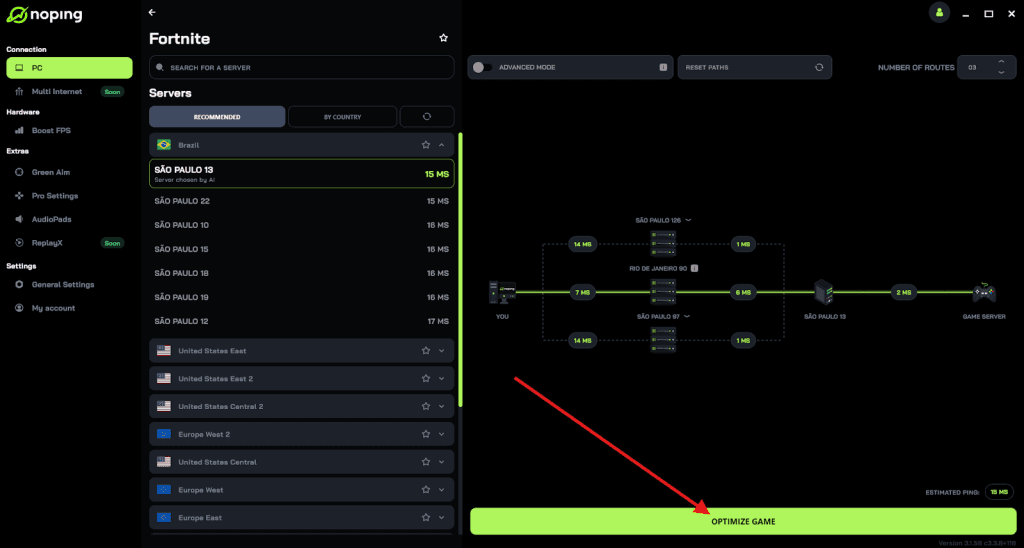
- And that’s it, you can start playing with optimized ping!
You can test different servers within NoPing to see which gives you the lowest latency.
Work on mindset and teamwork
Competitive games are social. Build communication habits, emotional control and a growth mindset. Learn to deal with losses constructively.
Measure progress
Track stats that matter to your role: damage per round, K/D, objective control, win rate in specific matchups, and use those metrics to guide practice.
FAQ - competitive gaming
Q: At what age can I be a pro?
There’s no single age requirement; many pro players are teenagers or in their early 20s. Some leagues have minimum age rules (for legal and contract reasons), so check the league rules for the title you want to pursue.
Q: How long does it take to go from casual to pro-level?
Depends on talent, time invested and the game’s competitive depth. For some players it can take a year or two of focused effort; for others it’s faster or much slower. Consistency beats bursts of random practice.
Q: Is coaching expensive?
Costs vary widely. Some coaches charge modest hourly rates, others are organizational staff costing thousands monthly. Many creators offer free resources, and community coaching groups can be affordable alternatives.
Q: Do I need streaming to go pro?
No, but streaming and content creation increase visibility and income diversification. Many pros combine competitive play with streaming or content to supplement earnings and attract sponsors.
Q: How do teams scout players?
Teams scout through amateur tournaments, ladder leaderboards, community recommendations, trial matches, and watching streams. Stand-out performance in open tournaments or consistent high-rank play attracts attention.
Q: Is travel necessary?
At higher levels, yes,international events require travel, and LAN events are common for majors. Regional competition and online leagues can minimize travel, especially during early stages.
Competitive gaming offers multiple pathways: casual ladder improvement, semi-pro circuits, collegiate or sponsored play, and full professional careers.
It’s an ecosystem that rewards focus, consistent practice, teamwork and sometimes technical investment.
If you’re serious, pick a title, structure your practice, measure progress, and invest in reliable tech and connection.
Download NoPing now and improve your performance in competitive gaming! Start your free trial!