

Healers in Marvel Rivals are called Strategists, and they’re the unsung backbone of any match‑winning team.
Whether you're new or a ranked veteran, knowing who can actually keep your squad alive (and maybe tilt the outcome) matters.
In this article, we will break down exactly how many Strategists (healers) there are, who they all are, who shines the most, their pros and cons, playing tips, counters, and some FAQs you might have.
Also read these posts about Marvel Rivals!
- The Best Duelists in Marvel Rivals [Tier List]
- Marvel Rivals Tips to Win Every Match [Beginner’s Guide]
- How to Fix Marvel Rivals Lag
How Many Healers (Strategists) Are There in Marvel Rivals?
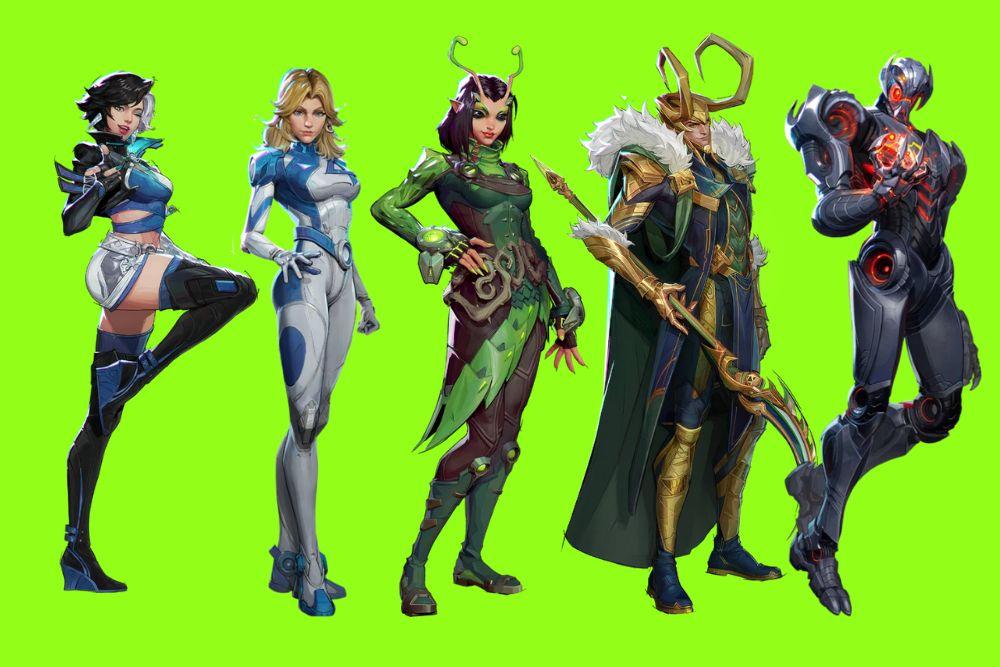
As of Season 3.5, there are nine officially playable Strategists in Marvel Rivals.
In the game’s class system, Strategists are essentially the support role, and many (but not all) of them focus on healing.
While other classes like Duelists and Vanguards lean into damage or defense, Strategists exist to support the team through healing, buffs, utility, and area control.
Think of them as the lifeline during chaotic fights, the ones that keep your MVP DPS alive long enough to carry.
All Healers (Strategists) in Marvel Rivals
Strategists in Marvel Rivals are your team’s support backbone: characters designed to heal, buff, control space, and occasionally disrupt enemies.
Not every Strategist is all about healing, but each one brings something unique to the table in terms of sustain and team impact. Here's a breakdown of all nine active Strategists as of Season 3.5, with a short intro for each:
Mantis

A high-skill, utility-packed Strategist who thrives on balancing healing and buffs.
Mantis uses Life Orbs to fuel her abilities: Healing Flower restores health over time, Allied Inspiration boosts ally damage, and her ultimate Soul Resurgence creates a zone that heals, grants movement speed, and converts excess heal to bonus health.
Luna Snow

Marvel’s ice-powered pop star with one of the strongest healing kits in the game.
Her primary attacks both damage enemies and heal allies; Share the Stage passes on healing to a teammate; and Fate of Both Worlds, her ultimate, toggles between team-wide invulnerability/healing or damage buff. Her passive gives her fast movement on skates.
Rocket Raccoon

Small, mobile, and deceptively tough to hit—Rocket uses Repair Mode to heal allies with healing pellets, and deploys a Battle Rebirth Beacon that revives a teammate.
His ultimate grants over‑health to nearby allies with damage buffs.
Invisible Woman

Technically a tactician with both offense and support utility. She heals via piercing projectiles, deploys shields that heal and block damage, can push or pull enemies with telekinesis, slow them with AoE, and use invisibility for escapes or positioning.
Cloak & Dagger

A dual-character Strategist: Dagger provides healing bursts, while Cloak helps with stealth, teleport, and tanky crowd‑control gaps.
Their ultimate creates stacked healing zones during fights. More subtle healer than burst-based, but strong in zoning and utility.
Adam Warlock

The “revive master” with Karmic Revival, his ultimate that brings back fallen teammates and resets their team fights.
He also uses Soul Bond to tether allies for healing and shares damage taken. He’s best as a secondary strategist in dive-heavy team comps.
Loki

As the God of Mischief, Loki manipulates illusions and clones to distract enemies and heal teammates via Regeneration Domains placed via his clones.
His ultimate can steal or mimic teammates’ tools, making him tricky in coordinated play, though often outplayed by experienced opponents.
Jeff the Land Shark

Jeff heals teammates using Joyful Splash and dropping Healing Bubbles that boost healing and speed.
His ultimate "It’s Jeff!" can swallow enemies and allies alike then spit them out—potentially turning the tide of battle. He's beginner-friendly and mobile via Hide and Seek, but has lower sustained healing versus veteran Strategists.
Ultron

All images: Marvel Rivals Wiki
Introduced in Season 2.5, Ultron brings mechanical healing via drones, ranged energy beam attacks, flight, and team-support tools from an aerial perspective. His kit suits ranged, tactical play, offering resilience and tactical placement advantages.
What Are The Best Healers in Marvel Rivals?
When we talk about the best healers in Marvel Rivals, it’s really about which Strategists deliver the most effective healing, synergy, survivability, and utility in competitive play. Across tier lists, player feedback, and current meta performance, these five consistently emerge at the top:
1. Luna Snow — S‑Tier, Top Solo Healer

Luna Snow stands out for delivering constant, reliable healing through her primary fire and abilities, able to heal multiple teammates simultaneously.
- Her Fate of Both Worlds ultimate is a game-changer, offering rapid AOE healing, optional damage buffing, or invulnerability depending on team needs.
- She also brings strong crowd-control with freeze and respectable mobility via her skating passive. Players and tier lists alike consider Luna one of the most practical and effective healers for solo Strategist play.
2. Invisible Woman — S‑Tier, Utility & Defense Focused

Invisible Woman blends healing with battlefield control:
- Her primary Orb Projection pierces through enemies to heal allies.
- Her Guardian Shield absorbs damage and heals nearby teammates (~60 HP/sec) and can be recalled to speed up cooldowns.
- Her ultimate Invisible Boundary creates a zone that grants invisibility and healing to allies while slowing enemies passing through it. She’s revered for being consistently strong in ranked play and rarely banned, making her a safe and versatile pick.
3. Rocket Raccoon — S‑Tier, Reliable Back‑Line Sustain & Revive

Rocket offers one of the most user‑friendly and effective healing kits:
- Repair Mode fires healing pellets that bounce to multiple teammates.
- His Battle Rebirth Beacon can revive a fallen ally and drops armor packs.
- His ultimate C.Y.A. (Cosmic Yarn Amplifier) grants nearby allies over‑health and a damage boost—perfect for coordinated pushes. He’s excellent at staying alive, supporting grouped tanks, and consistently topping healing charts in real matches.
4. Mantis — A‑Tier, Strong Burst Healer & Buffer

Mantis excels in high-skill hands and strategic gameplay:
- Her Life Orbs fuel both healing (Healing Flower) and damage buffs (Allied Inspiration).
- Her Spore Slumber can sleep divers or disrupt enemy ultimates.
- Soul Resurgence, her ultimate, heals allies over time, boosts their speed, and converts excess heals into bonus health. She’s one of the few healers whose healing output scales with aim precision, making her very strong when played well, but less forgiving if misses happen.
5. Loki — A‑Tier to S‑Tier, Situational but High Skill Potential

Loki’s kit is trickier, but devastating when mastered:
- Uses clones and illusions to apply AoE healing zones through his Regeneration Domains.
- His ultimate can steal or mimic another hero’s ultimate, a high potential game-swinger if timed and targeted well. He thrives against dive compositions and excels in disorienting enemies, but requires setup and smart clone placement to shine—and is more vulnerable if opponents remove his illusions.
Community Picks & Real‑Player Commentary
- On Reddit:
“It’s just Mantis and Luna are the strongest ye” – highlighting Mantis and Luna as top-tier healers overlapping meta picks.
“Rocket’s heals in the neural are actually crazy… rare to not top the lobby on healing” – players consistently mention Rocket’s healing output and survivability as standout.
Why These Five?
| Strategist | Why They Shine |
| Luna Snow | High healing throughput, versatile ult, freeze control, mobility |
| Invisible Woman | Shields, zone healing, CC, invisibility escape, ease of use |
| Rocket | Reliable healing orbs, revive station, mobility, hard to kill |
| Mantis | Orb-based healing + damage buff synergy, large ult field, high skill ceiling |
| Loki | Clone-based healing, ult-steal potential, zone disruption, powerful vs. dive comps |
What About Others?
- Cloak & Dagger and Adam Warlock typically fall behind in ranked tiers. They're solid but often act as secondary or less consistent healers compared to the top five. Cloak & Dagger’s map control is great, but their healing output can’t match grouped sustain. Warlock's revive ult is powerful situationally but doesn’t compensate for weak sustained heals.
- Jeff the Land Shark receives praise for his speed, bubble healing, and unique ultimate, but most tier lists place him mid‑to‑low. His healing is fast but limited in output and range compared to the top healers unless well positioned.
What Are The Strengths and Weaknesses of Healers in Marvel Rivals?
Let’s break down the major strengths and weaknesses of the healer role in the game, based on the current Season 3.5 meta.
Strengths of Healers in Marvel Rivals
1. Fight Longevity & Sustain
Healers dramatically extend teamfight duration. A well-positioned Mantis, Rocket, or Luna Snow can keep a frontliner alive through multiple ultimates, buying crucial seconds for teammates to rotate, respawn, or flank. Healing allows for multi-phase fights, especially in tight overtime situations.
2. Team Utility Beyond Healing
Most healers also provide barriers, buffs, speed boosts, zoning, invisibility, crowd control, and revives.
- Invisible Woman protects with shields.
- Mantis can sleep enemies.
- Rocket revives allies.
- Ultron supports from above while zoning with drones.
This makes healers excellent force multipliers that enhance any team comp beyond raw healing.
3. Clutch Ultimates That Swing Fights
Many healer ultimates can turn the tide of a match:
- Luna Snow’s invulnerability aura can shut down a coordinated enemy push.
- Adam Warlock’s mass revive can instantly reset a losing fight.
- Mantis’s healing field with bonus HP can outlast enemy ult damage. These game-changing moments are why healers are often the difference between a clean teamwipe and a clutch comeback.
4. Strategic High Ground Control
Several healers, like Ultron, Loki, and Rocket Raccoon, can operate from high ground, rooftops, or other elevated positions.
This lets them support safely from afar, where it's harder for enemies to dive or flank them. They also control space with their abilities while staying protected.
5. Meta-Defining in Objective Modes
In modes like Payload or Capture Point, where sustain > burst, healers shine. They help maintain control of space and give time for tanks and duelists to contest.
Even lower-tier healers like Jeff or Cloak & Dagger can be valuable on defense-heavy maps due to AoE heals or zone denial.
Weaknesses of Healers in Marvel Rivals
1. High Target Priority
Healers are usually priority targets in fights. Once the enemy team spots your Strategist, they’ll often hard-focus them—especially in ranked. Without good positioning or peel from tanks, most healers are easy to dive and eliminate.
- Luna Snow has mobility, but a skilled Widow or Magneto can still burst her down.
- Mantis, despite healing power, lacks quick escapes.
- Rocket is small and evasive but can’t take much damage.
2. Low Damage Output
Most healers do little to no meaningful damage, which means they rely heavily on teammates to secure kills. If your team is underperforming, your impact is limited to prolonging fights, not turning them around on your own.
- Even damage-capable Strategists like Loki or Invisible Woman struggle in straight duels against DPS roles.
3. Requires Strong Team Coordination
Healers rely on team awareness and positioning. If your teammates overextend, ignore healing zones, or don’t protect their Strategist, there’s not much you can do.
- Adam Warlock’s tether is only effective if allies stay linked.
- Mantis’s buffs are wasted if teammates split or go solo.
Random matchmaking without voice chat can make healer roles feel frustrating and underappreciated.
4. Limited Mobility
While a few healers have movement abilities (e.g., Loki’s clones, Ultron’s flight, Luna Snow’s dash), many others are vulnerable to being flanked or pinned.
- Cloak & Dagger are slow and easily cornered when their teleport is down.
- Jeff, while tanky for a support, is still predictable and easy to read when trying to escape.
5. Countered by Crowd Control and Burst
Healers are especially weak to high-burst damage and crowd control (CC):
- Spider-Man’s web, Magik’s blink combo, or Storm’s lightning trap can isolate and delete supports in seconds.
- Healing over time doesn’t help much if a teammate is instantly wiped out.
This forces healers to pre-position carefully and anticipate enemy ult timings—otherwise, they’re just watching teammates drop before they can intervene.

And here’s a breakdown per hero:
- Ultron – strength: can heal from far back with drones and beam, good survivability and utility; weakness: high skill required to place drones and target healing safely.
- Mantis – strength: flexible orbs that heal, buff, and give speed/bonus health; healing scales with aiming precision; weakness: falls flat if you’re not consistently landing headshots.
- Luna Snow – strength: heals multiple teammates at once, freezes enemies, fast and mobile; weakness: no self‑heal or escape skill beyond her passive movement boost.
- Invisible Woman – strength: shields that protect and heal, CC utilities, invisibility escape, ranged healing; weakness: shield has low health and she has no direct self‑heal.
- Rocket Raccoon – strength: consistent healing pellets, quick revive station, good damage; weakness: ultimate charges slower, less impactful if team isn't clustered.
- Cloak & Dagger – strength: stealth/teleport, team‑wide ultimate, can ambush; weakness: stationary healing and low output outside ult.
- Loki – strength: clones distract and heal across the map, zone control; weakness: easily countered by experienced teams, healing weakens once clones are destroyed.
- Adam Warlock – strength: team revive with ult, soul‑link healing, decent damage; weakness: limited cycle, hard to sustain during long fights.
- Jeff the Land Shark – strength: bubbles can save nearby allies, surprise ultimate; weakness: short bubble duration/range, low fire rate, awkward ultimate usage.
Tips to Play With Healers in Marvel Rivals
Here’s pro‑level advice for playing a Strategist:
- Position smart: stay behind your Vanguard or dive buddy, avoid being picked off by flanking Duelists.
- Prioritize healing: know when to heal vs. when to use damage or buff. If your team is hot and healthy, it might be better to buff/pressure.
- Master each kit: Luna Snow’s idol/ultimate toggle; Invisible Woman’s shield placement & recall; Mantis’s headshot‑refill orb loop; Jeff bubble placement.
- Ultimate timing matters: save ults for clutch moments: team wipes, objective holds, or enemy cooldown windows.
- Communicate: ping when you’re low on healing or coordinate ulti combos; teamwork multiplies healing impact.

How to Counter Healers in Marvel Rivals?
Here’s how you deal with healers when you’re playing a DPS or Vanguard:
- Focus fire the healer: take out Invisible Woman or Luna Snow early to shut off healing flow.
- Dive hard with flankers: Heroes like Phoenix (new Season 3 Duelist) excel at murdering backlines fast.
- Use anti‑heal mechanics: Blade (Season 3.5 Duelist) has abilities that reduce enemy healing. He also self‑sustains while denying others.
- Spread out team: avoid grouping so Rocket’s pellets/ult or Luna’s AoE heals are less effective.
- Deny team synergy: Ultron gets weaker without his drones targeted, or Mantis loses orb chain if you pressure the user.
How to Play with Healers in Marvel Rivals at Top Performance?
To get the most out of any healer in Marvel Rivals, you need more than good aim and positioning, you need a stable, low-latency connection.
Healing skills like Rocket’s Repair Mode or Mantis’ orbs require precise timing, and even a small ping spike can ruin a clutch save or ultimate.
That’s where NoPing helps. It optimizes your connection by reducing latency, avoiding packet loss, and improving stability. With smoother inputs and faster reaction times, you can heal more reliably, stay alive longer, and make your ultimates count.
Here’s how to use NoPing to increase your performance in Marvel Rivals:
- Sign-up through the website and download NoPing (you can try it for free)
- Open NoPing and search for Marvel Rivals inside the software

- Once you find Marvel Rivals, click on it. Choose your server on the next screen and click on “Optimize Game”.

- And that’s it, you can start playing Marvel Rivals with optimized ping!
You can test different servers within NoPing to see which gives you the lowest latency.
Why is the Utility of a Strategist more important than raw healing output?
Raw healing is a reactive statistic, while utility is a proactive force that dictates the flow of combat. In Marvel Rivals, if you only focus on replenishing health bars, you are simply delaying an inevitable loss if the enemy team has superior crowd control or damage buffs.
Utility includes abilities like Loki's shapeshifting, which can turn the tide of a fight by copying an enemy Ultimate, or Rocket Raccoon's combat beacon that increases the lethality of your entire backline.
Data from high-level competitive matches shows that teams with a "utility-first" mindset have higher win rates because they prevent damage before it happens.
For instance, a well-timed displacement or a stun can stop a diving Black Panther mid-air, which is far more effective than trying to out-heal his burst damage once he reaches your teammates.
You must prioritize Strategists who offer tools like damage amplification, invisibility, or resurrection, as these mechanics create "playmaking" opportunities that raw HP recovery cannot match.
What is the role of a Strategist in counter-picking the enemy team?
The Strategist is the primary responder to the enemy's tactical choices. Your role is to identify which enemy hero is causing the most disruption and switch to a Strategist that nullifies that specific threat.
If the opposing team is finding success with a "dive" composition, focusing on high-mobility Duelists like Spider-Man, you should switch to a Strategist with strong self-peel or area denial, such as Mantis with her sleep spores.
Counter-picking isn't just about survival; it is about exploiting enemy weaknesses. If the enemy team is playing a "bunker" style with heavy shields, selecting a Strategist who can provide vertical pressure or bypass barriers with specific Team-Up abilities becomes essential.
In Marvel Rivals, the ability to change heroes mid-match means the Strategist must constantly monitor the scoreboard. If you stay on a hero that is being countered, you become a liability, regardless of how much healing you provide.
Why is verticality a key factor for Strategist survival?
Survival in Marvel Rivals is often determined by your coordinates on the Z-axis. Because many Duelists rely on ground-based combos or horizontal movement, taking the high ground provides a natural layer of protection.
Strategists who master verticality can maintain a clear line of sight on their entire team while remaining difficult to reach for ground-based threats like Magik.
Staying on the ground makes you an easy target for area-of-effect Ultimates and predictable flank routes. By utilizing the destructible environments and high platforms found in maps like Yggsgard, you force attackers to expend their movement cooldowns just to engage you.
This creates a window of vulnerability for the enemy; if they use their dash or jump to reach your ledge, they have no escape once your team turns to peel for you. Mastering the vertical layout of each map is just as important as mastering your character's ability kit.
FAQ - Healers in Marvel Rivals
Q: Why is Jeff the Land Shark so low in tier lists?
A: Despite being adorable, his healing bubble is short‑range and slow to recharge; his ultimate is risky. He simply doesn’t keep up with output of better healers.
Q: Is Adam Warlock viable in ranked play?
A: He has a powerful team‑revive ultimate and soul‑link healing, but lacks consistent output. He's more niche or useful as a secondary Strategist.
Q: Any healer updates coming in Season 3.5?
A: Yes, Season 3.5 launches August 8, 2025 with new Blade as a Duelist anti‑healer, plus a Luna Snow + Adam Warlock team‑up that improves healing synergy. Also balance tweaks to Mantis and other Strategists.
Q: Who gets the most MVP votes, healers or damage dealers?
A: Shockingly, Strategists often get overlooked. Even heroes like Invisible Woman, Rocket, Jeff, and Mantis frequently receive fewer MVP/SVP votes compared to Duelists, despite being pivotal to team success.
Playing a healer in Marvel Rivals isn’t always flashy, but it’s one of the most impactful roles in the game. The best teams are the ones that survive longer, and that’s only possible with a solid Strategist behind them. If you enjoy supporting your team, making clutch saves, and controlling the flow of battle, healer is where you shine.
And to always play Marvel Rivals without worrying about lag, use NoPing! Download now and start your free trial!