

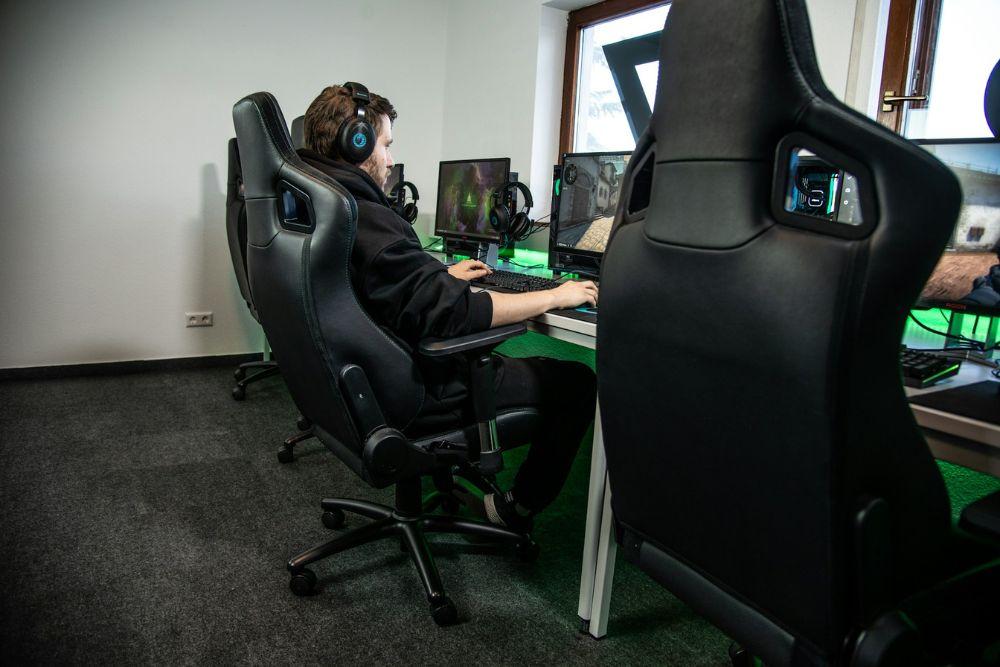
Developing effective competitive gaming strategies is the fundamental difference between someone who plays for fun and someone who plays to win.
We have all been there, stuck in a specific rank for months, feeling like our mechanical skills have hit a ceiling, and wondering why some players seem to move with a level of precision that feels almost unfair.
The truth is that getting better at games is rarely about how fast you can click a mouse. It is a holistic process that involves your gear, your internet, your brain, and your physical health.
If you are ready to stop grinding aimlessly and start climbing, you need to understand the layers that make up a top tier competitor.
Why is the mental game the most critical factor?
Your mindset is the operating system for your entire performance, as even the best mechanical skills will fail if your brain is clouded by frustration or fatigue.
Research into esports performance suggests that up to 50% of the difference between winning and losing comes down to mental preparedness and a player's state of mind.
When you are in a flow state, your reactions are instinctive and your decision making is sharp.
However, when you tilt, your prefrontal cortex, the part of the brain responsible for complex planning and impulse control, essentially takes a back seat to your emotional responses.
To master the mental game, you must focus on these three pillars:
- Emotional Regulation: You have to accept that losing is a part of the learning process. If a teammate makes a mistake or a lucky shot goes against you, reacting with anger only ensures that your next play will be worse.
- The Growth Mindset: Instead of saying "I lost because my team is bad," ask "What could I have done to carry that situation?" This shift in perspective turns every match into a lesson.
- Focus Intervals: High level play requires intense concentration. Most players can only maintain peak focus for about 40 to 50 minutes before performance begins to dip. Taking short breaks between matches is not a sign of weakness; it is a tactical necessity to clear your mental cache.

How does hardware actually change your performance?
Hardware acts as the bridge between your intentions and the game's reality, and even a few milliseconds of delay can be the difference between a headshot and a missed opportunity.
While skill is paramount, you cannot ignore the physical limitations of your setup. For example, the jump from a standard 60Hz monitor to a 144Hz or 240Hz display is not just about making the game look prettier.
A 144Hz monitor updates the image every 6.94 milliseconds, while a 240Hz monitor does it every 4.17 milliseconds.
This reduction in frame interval significantly decreases motion blur and input lag. In fast paced titles like Counter-Strike 2 or Valorant, professional players have reported that they can track targets up to 25% faster when moving from 144Hz to 240Hz.
If your computer is pushing 300 frames per second but your monitor can only show 60, you are essentially playing with a blindfold on.
Key hardware upgrades to consider:
- High Refresh Rate Monitor: Aim for at least 144Hz to ensure you are seeing the most current data possible.
- Low Latency Mouse and Keyboard: Look for peripherals with a high polling rate (1000Hz or higher) to minimize the time it takes for your clicks to reach the CPU.
- A Consistent GPU: It is better to have a stable 144 FPS than a frame rate that jumps between 100 and 300, as fluctuations mess with your muscle memory.
What role does network stability play in winning?
Network stability is the invisible foundation of competitive gaming, and without it, even the most expensive PC in the world cannot save your rank.
We often talk about "lag" as a general annoyance, but the data shows it is a specific performance killer.
Studies in first person shooters have demonstrated that increasing your latency from 20ms to 100ms can reduce your aiming accuracy and reaction speed by as much as 30%.
When your ping is high or fluctuating, your character is not where you think it is, and your shots may not register even if they look perfect on your screen.
This is where NoPing becomes an essential tool. Most internet service providers route your data through various congested hubs before it reaches the game server.
This creates "jitter" (variation in latency) and packet loss. NoPing bypasses these crowded paths, providing a direct lane to the server.
Here’s how to use NoPing to fix high ping in online games:
- Sign-up through the website and download NoPing (you can test it for free).
- Open NoPing and search for your game inside the software
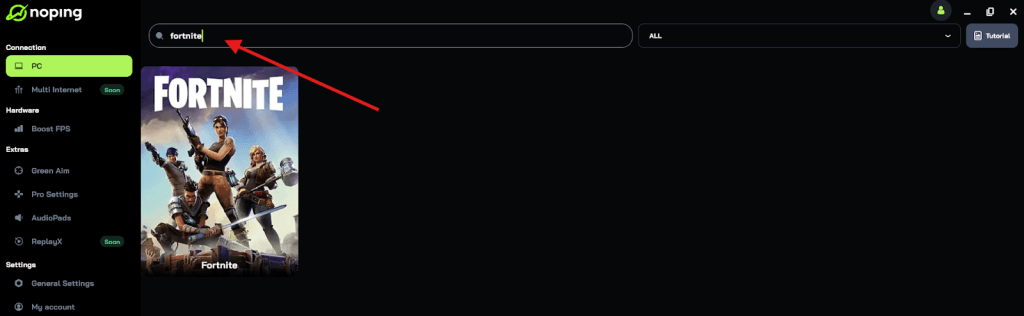
- Once you find it, click on it and, on the next screen, select “Choose automatic” or “Choose manual” and click “Continue”. We recommend choosing automatic, as NoPing’s technology analyzes all routes on a global scale and automatically selects the best option for you.
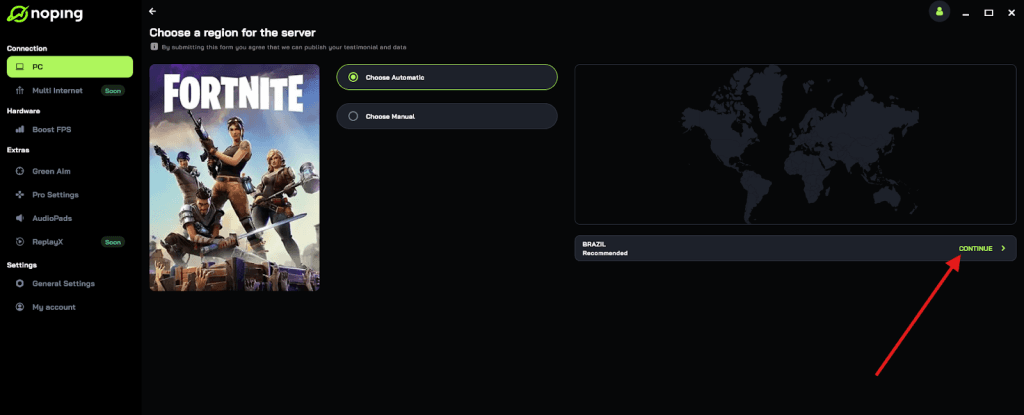
- On the next screen, click on “Optimize Game”.
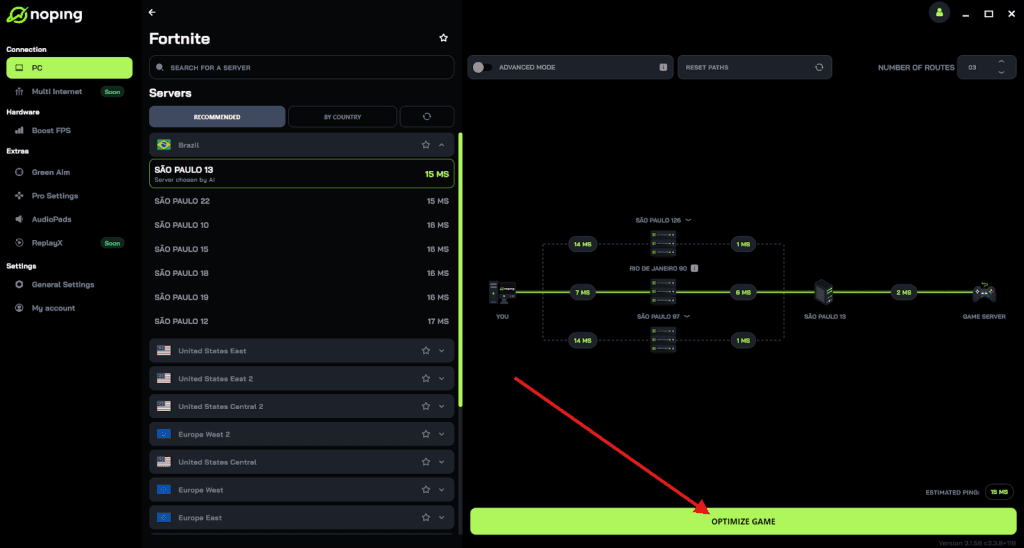
- And that’s it, you can start playing with optimized ping!
You can test different servers within NoPing to see which gives you the lowest latency.
What is deliberate practice and how do you use it?
Deliberate practice is the process of breaking down complex games into tiny, manageable skills and training them in isolation.
Most players make the mistake of just playing match after match, hoping they will naturally get better.
This is called "auto-pilot" gaming, and it is the slowest way to improve. If you want to see real results, you need to go into every session with a specific goal that has nothing to do with winning the game.
For instance, if you are a League of Legends player, your goal for a week might be to hit every single last hit on minions for the first 10 minutes, regardless of whether you win the match.
If you are playing a tactical shooter, you might spend 30 minutes a day specifically on "crosshair placement" while moving around the map.
How to structure your practice:
- VOD Review: Watch your own replays. It is much easier to spot your positioning errors when you are not in the heat of the moment.
- Aim Trainers: Use software like Aim Lab or Kovaak’s to isolate mouse movements from game logic.
- Skill Isolation: Pick one mechanic (like movement, utility usage, or economy management) and focus only on that for a set period.
- Measurable Goals: Do not just say "I want to get better." Say "I want to increase my headshot percentage by 5% this month."

Why is communication the ultimate team skill?
Effective communication acts as a force multiplier for your team's skill, allowing five individuals to act as a single, cohesive unit. In competitive environments, silence is often a death sentence.
However, "talking a lot" is not the same as "communicating well." Bad communication involves complaining about a death or giving vague directions like "he is over there." Good communication is clear, concise, and actionable.
Poor communication costs rounds because it creates confusion.
If you tell your teammate "there is one mid," they have to spend mental energy wondering where exactly mid is or what weapon the enemy has.
If you say "one sniper, mid boxes, 50 health," your teammate has everything they need to make a play.
Master these communication habits:
- Standardized Callouts: Learn the specific names for every location on the map. Every game has a "heaven," "connector," or "long." Use them.
- The Information Loop: When you see an enemy, say who, where, and what they are doing.
- Positive Reinforcement: High morale leads to better performance. A simple "nice try" after a lost round can prevent a teammate from tilting and throwing the rest of the match.
- Keep it Brief: Do not clutter the voice chat during active moments. If you are dead, give your info and then stay quiet so your teammates can hear footsteps.
How do you master the game’s meta?
Mastering the meta involves understanding the current "Most Effective Tactics Available" and adapting your playstyle to exploit the strengths of the latest patch.
Games are constantly evolving; developers buff certain characters and nerf others to keep the experience fresh. If you are still playing the same way you did six months ago, you are likely putting yourself at a disadvantage.
You need to become a student of the game. This means reading patch notes thoroughly to understand how a 5% decrease in a weapon's fire rate actually changes the "time to kill."
It also means watching professional matches, not just for entertainment, but to observe their rotations, their item builds, and how they react to specific situations.
Steps to stay ahead of the curve:
- Analyze Tier Lists: Understand which characters or items are currently the strongest, but also learn why they are strong.
- Follow Pro Players: See what the best in the world are doing. They often find "broken" strategies weeks before the general public.
- Be Flexible: Do not be a "one trick pony." Having a deep pool of characters or strategies allows you to adapt when the meta shifts or your main gets banned.
What physical habits should a gamer maintain?
Your body is the hardware that runs your brain, and neglecting your physical health will eventually lead to a decline in reaction time and cognitive function.
Competitive gaming is a marathon, not a sprint. Chronic issues like carpal tunnel syndrome, eye strain, and back pain are not just uncomfortable; they are career enders.
Research indicates that sleep deprivation has a similar effect on reaction time as being legally intoxicated.
If you are playing on four hours of sleep, your brain cannot process visual information fast enough to compete at a high level. Similarly, dehydration leads to a loss of focus and increased irritability.
Maintain these basic habits:
- Ergonomic Setup: Ensure your monitor is at eye level and your chair supports your lower back to prevent long term injury.
- The 20-20-20 Rule: Every 20 minutes, look at something 20 feet away for 20 seconds to reduce eye strain.
- Hydration and Nutrition: Avoid heavy, sugary snacks that lead to a "crash." Water and balanced meals keep your energy levels stable.
- Active Recovery: Stretching your wrists and taking walks between sessions improves blood flow and helps with mental clarity.
Becoming a better player is about more than just clicking heads. It is a systematic approach to self improvement that covers everything from your router settings to your sleep schedule.
By optimizing your connection NoPing, upgrading your hardware, and adopting a disciplined practice routine, you give yourself the best possible chance to succeed.
The path to the top is long, but with the right strategies, every match brings you one step closer to mastery.
Play more than 3000 games without lag. Download NoPing now and start your free trial!