

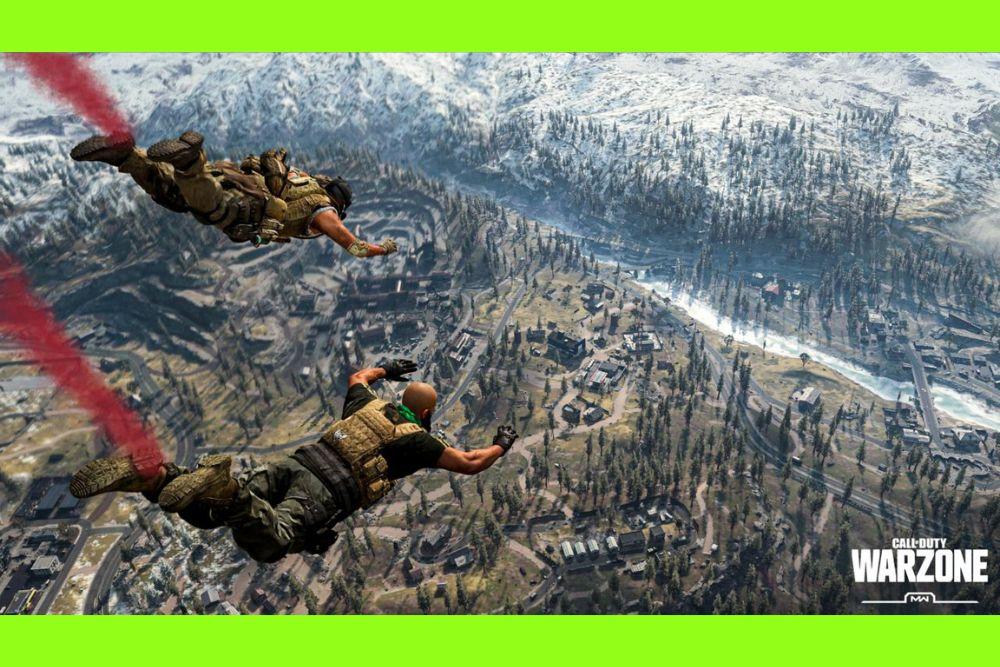
If you’ve ever been mid-gunfight and felt the world stutter, you know how brutal lag in Warzone can be.
This guide walks through the common types of lag, practical fixes, why these problems happen, and a short FAQ with useful extras. Let’s go!
Types of Lag in Warzone
Below are the main forms of lag you’ll see in Warzone.
- High ping / latency — long travel time for packets between you and the game server; you feel a general input delay.
- Packet loss / packet burst — some game data packets never arrive or arrive in clumps, producing jerks, rubberbanding, or sudden freezes.
- Stuttering / FPS drops — visual frame drops from GPU/CPU issues or streaming assets; often separate from pure network lag but equally harmful.
13 Ways to Fix Lag in Warzone
Do them one at a time and test. Sometimes one change (like switching from Wi-Fi to Ethernet) already makes the biggest difference.
1. Use a wired Ethernet connection (not Wi-Fi)
Wi-Fi can be unstable: interference, range, and other devices all cause latency fluctuations and packet loss. A direct Ethernet cable typically gives you lower, more consistent ping and far fewer packet drops. If you can, plug your PC or console directly into the router or a managed switch.
2. Restart your router and modem properly
Simple but effective: power cycle both devices (unplug for ~30 seconds). This clears temporary routing issues and can improve throughput. If your ISP equipment is old, consider asking for a modern modem/router combo or using your own better-spec router.
3. Update GPU and network drivers, plus Windows/console patches
Outdated GPU drivers cause stutter and driver conflicts; outdated network drivers can cause bad packet handling. Keep Windows (or console system) updated and install the latest GPU/network drivers from NVIDIA/AMD/Intel or your motherboard vendor. Official support docs list driver updates among basic troubleshooting steps.
4. Close background apps that use bandwidth or CPU
Streaming apps, downloads, cloud backups, and even browser tabs share network and CPU resources. Close or pause anything that might upload/download or use heavy CPU while you play. On PC, check Task Manager; on consoles, close suspended apps.
5. Set Warzone to a lower or more stable graphics profile (fix FPS stutter)
If your GPU is struggling, stuttering and frame drops can look like lag. Reduce settings like render resolution, shadow quality, and ray tracing. Set a frame limit to reduce micro-stutters if your GPU is inconsistent.
6. Check your NAT type and ports (console players especially)
Strict or moderate NAT can cause matchmaking issues and higher latency to certain peers. Enable UPnP on your router or manually forward the recommended Call of Duty ports to improve connectivity.
7. Run a speed test and check for packet loss to your ISP
A quick speed test to a nearby server checks bandwidth and basic ping, but to test packet loss you can run continuous ping or use tools like tracert/mtr. If you see packet loss before your ISP’s network, contact ISP support — persistent upstream packet loss is their problem, not the game’s.
8. Use Quality of Service (QoS) on your router or reserve bandwidth for gaming
If your router supports QoS, prioritize gaming traffic or the console/PC’s IP address. That helps when other household devices are streaming or downloading. Some modern routers also offer gaming modes that automatically prioritize low-latency traffic.
9. Switch DNS or use a gaming-optimized DNS (sometimes helps)
Changing to a fast, stable DNS (Cloudflare 1.1.1.1, Google 8.8.8.8) won’t magically lower gigabit latency, but it can reduce time-to-resolve servers and sometimes improve initial connection reliability. This is a small tweak but low risk.
10. Avoid peak hours or full servers and check server status before playing
If Activision’s servers are having issues or peak time causes overloaded lobbies, performance drops are out of your hands. Check official server status or community reports before troubleshooting locally.
11. Use NoPing
NoPing is a service designed to optimize your route to Call of Duty’s servers. Sometimes, the normal path your internet provider uses isn’t the fastest. NoPing reroutes your data through a better, more direct path.
Here’s how to use NoPing to fix lag in Call of Duty:
- Sign-up through the website and download NoPing (you can try it for free)
- Open NoPing and search for Call of Duty inside the software

- Once you find Call of Duty, click on it and, on the next screen, select “Choose automatic” or “Choose manual” and click “Continue”. We recommend choosing automatic, as NoPing’s technology analyzes all routes on a global scale and automatically selects the best option for you.

- On the next screen, click on “Optimize Game”.

- And that’s it, you can start playing CoD with optimized ping!
You can test different servers within NoPing to see which gives you the lowest latency.
12. Consider a gaming router or hardware solutions like Netduma if you host many devices
Specialized gaming routers offer real-time connection control, geo-filtering to lock into nearby servers, and advanced QoS. For households with many active devices, these routers can reduce latency spikes.
13. If all else fails, file a detailed support ticket with Activision
When you’ve tried the usual steps and still see unusual packet loss, timeouts, or progressive performance degradation across sessions, file a ticket with Activision and include logs, traceroutes, and timestamps.
What Causes Lag in Warzone?
Short answer: many things. The main buckets are:
- Your home network — Wi-Fi noise, overloaded routers, QoS not set, or too many devices.
- ISP routing and congestion — poor routes to the game servers or upstream packet loss.
- Server problems or game bugs — developer side issues or seasonal regressions can cause global lag spikes.
- Local hardware and drivers — GPU/CPU throttling, insufficient RAM, or bad drivers causing stutter or freezes.
All of the above can stack: for instance, unstable Wi-Fi plus a congested ISP route plus a CPU bottleneck makes diagnosing harder. That’s why the troubleshooting steps above try to separate network problems from local hardware issues.
FAQ - Lag in Warzone
Q: How can I check if packet loss is affecting me specifically in Warzone?
A: Run a continuous ping to a stable host (your gateway and then an external IP) and use tracert/mtr to see where packets drop. Some in-game HUDs or third-party overlays also show packet loss. If packet loss happens before your ISP’s first hop, it’s likely your local network; if it happens after, contact your ISP.
Q: Will upgrading my internet speed (higher Mbps) reduce lag?
A: Higher bandwidth helps for downloads and multiple devices, but raw latency (ping) depends on route and physical distance. Upgrading may not lower ping if routing is poor; it will, however, reduce issues caused by bandwidth saturation.
Q: Can I force Warzone to use a specific server region to reduce ping?
A: Warzone matchmaking generally places you in nearby regions automatically; console players have less control. Some third-party tools and VPNs can route you to a preferred region, but that can affect matchmaking fairness and latency unpredictably.
Q: What’s the difference between “lag” and “rubber-banding”?
A: Rubber-banding is a result of packet loss or inconsistent packet timing where the game reverts you to a previous position. Lag is broader and includes high ping, input delay, and stutter. Packet burst is one technical cause of rubberbanding.
Fixing lag in Warzone often requires both network and local performance work. Start with the low-effort, high-impact changes: use Ethernet, reboot networking gear, update drivers, and close background apps.
And to always play Warzone without lag, use NoPing! Download now and start your free trial!