

If you’ve played even a couple of matches, you’ve probably asked yourself “what does ace mean in Marvel Rivals?”
And fair question: the game uses Ace in two totally different ways, which trips up new and veteran players alike.
Sometimes you’ll see “Ace” stamped on the scoreboard next to a player portrait mid-match. Other times the word flashes big across the screen after a massive team wipe.
Those are not the same thing, and the game never really spells it out. Let’s clear it up!
The Two Meanings of “Ace” in Marvel Rivals Explained
Team Ace (the scoreboard title)
Open the scoreboard and you’ll notice one player on each team marked Ace. That’s basically the game’s way of tagging the current top performer for each side based on an internal mix of contributions, not just raw kills.
If you finish the match holding this tag and your team wins, you’re very likely the MVP; if your team loses, you’ll often be SVP (Second Valuable Player). Think of it like Overwatch’s old “On Fire” indicator: it signals who’s carrying the biggest overall impact at that moment.

Source: Esports.gg
Ace Kill (the team wipe announcement)
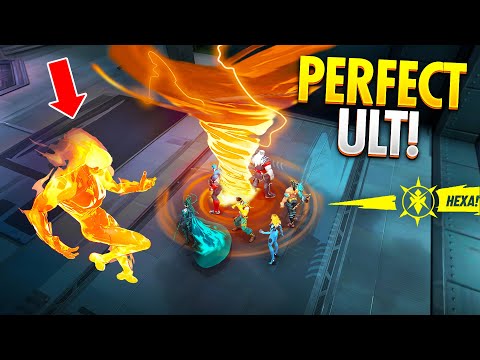
Separately, Ace can appear as a kill feed banner when your team eliminates all six opponents in quick succession.
It’s Marvel Rivals’ version of a “team kill” — timing-dependent and usually powered by well-coordinated ultimates. Anyone on your team can contribute; you don’t have to get all six eliminations yourself for the Ace popup to appear.
Wording aside, that’s the whole split: Ace (title) = top impact player; Ace (kill) = full enemy wipe in a short window.
All Things That May be Considered For Determining a Team Ace
Marvel Rivals’ post-match awards aren’t just about who tops the kills column. Multiple guides and community explanations point to a blend of contributions that feed into who gets tagged as Ace during a match and who ends as MVP/SVP afterward. These commonly include:
- High impact damage and eliminations (not only final hits), healing done, and damage blocked/mitigated. Support and tank metrics matter a lot here, which is why a clutch healer or front-liner can carry the Ace tag even with modest KO numbers.
- Objective influence and momentum-swinging plays (burst windows, team setups, multikills).
Some community resources and wikis echo that MVP/SVP reflect “a broad range of efforts,” not just damage or final blows, which aligns with what players observe on the scoreboard.
It’s why you’ll sometimes see an Ace icon on a tank with huge blocking numbers, or a support whose healing and utility kept fights winnable.
How to Get a Team Ace?
Aiming to be the Team Ace (and ultimately MVP/SVP) is less about chasing lone-wolf stats and more about stacking value where your role can shine.
For Duelists/Damage, that means consistent pressure and clean target focus so your eliminations convert objectives. Burst windows that create 3-for-0s will spike your impact, but sustained damage that softens multiple targets before a push can matter more over a full match.
For Vanguards, you’re farming value through space creation, peel, and damage blocked during critical pushes. Survive long enough for your team to follow up and your block/heal received metrics rack up fast.
For Supports/Strategists, prioritize healing throughput, timely saves, and utility: speed boosts, stuns, slows, and damage amps that enable your team’s wipe moments.
The key takeaway: play your job to amplify team outcomes, and the Ace tag tends to follow.
Which Ultimates Are More Likely To Get an Ace Kill?
Ace Kills are most common when teams chain crowd control and area damage into a clustered enemy, usually around chokepoints and objectives.
Certain ultimates are repeatedly cited by guides as Ace-friendly because they lock down enemies, hit wide areas, or dump lethal burst quickly.
Commonly mentioned examples include Jeff the Land Shark — It’s Jeff!, Spider-Man — Spectacular Spin, Storm — Omega Hurricane, Psylocke — Dance of the Butterfly, Scarlet Witch — Reality Erasure, Moon Knight — Hand of Khonshu, plus picks like Star-Lord and The Punisher when line-ups allow. The exact list varies by patch and context, but the pattern is clear: big AoE or hard control that punishes grouped opponents. Coordinate with a second ult or a setup ability to ensure the wipe window stays “quick succession.”
How to Play Marvel Rivals at Max Performance?
Marvel Rivals is extremely sensitive to latency, jitter, and packet loss.
Even if you’re landing the right combos and rotations, spikes can scuff an Ace Kill window or delay a lifesaving ability by a few frames.
NoPing helps by optimizing your route to the game servers, reducing lag and stabilizing your connection end-to-end.
If you’re grinding ranked or scrimming regularly, building that stability into your setup can be the difference between “almost a wipe” and a clean Ace.
Here’s how to use NoPing to increase your performance in Marvel Rivals:
- Sign-up through the website and download NoPing (you can try it for free)
- Open NoPing and search for Marvel Rivals inside the software

- Once you find Marvel Rivals, click on it. Choose your server on the next screen and click on “Optimize Game”.

- And that’s it, you can start playing Marvel Rivals with optimized ping!
You can test different servers within NoPing to see which gives you the lowest latency.
FAQ — Ace in Marvel Rivals
Does being Ace or MVP/SVP affect ranked points?
There isn’t an official statement that MVP/SVP directly modify ranked point gains or losses. Some players think it correlates, but reputable guides recommend treating MVP/SVP as honorary: you still gain/lose points primarily based on win/loss and the hidden MMR logic.
What’s the difference between a KO, Final Hit, and Assist?
A KO credits you when you contributed meaningful damage shortly before an enemy’s elimination, Final Hit is the actual killing blow, and Assist often covers non-damage support actions like heals, slows, or buffs that led to the elimination. This is why KOs can outnumber Final Hits, and why supports rack up assists even without taking shots.
Can the Ace icon change hands mid-match?
Yes. It updates dynamically as the game reevaluates who’s contributing the most overall. Swings in healing, blocking, multikills, or objective influence can flip it.
Is an Ace Kill always tied to ultimates?
Not strictly, but most documented Ace Kills involve at least one well-timed ultimate because you need fast, team-wide damage or control to wipe six players before respawns kick in.
Does the game explain Ace anywhere in-client?
Not clearly. That lack of in-game clarity is exactly why there’s community confusion and why multiple outlets have published explainers on the two meanings.
Can tanks or supports realistically end a match as MVP/SVP?
Absolutely. The game’s award logic isn’t kill-only; healing, blocking, and other role outputs can secure you the title, which is why you’ll sometimes see non-DPS carrying the Ace tag and ending with MVP/SVP.
In short, “Ace” in Marvel Rivals means two very different things depending on context — either the Team Ace tag on the scoreboard, showing who’s currently making the biggest impact for their side, or the Ace Kill announcement that pops up after your team wipes all six opponents in quick succession.
And if you want to have the best connection to chase those aces without worrying about lag, use NoPing! Start your free trial!