


The savage force is about to be unleashed! Path of Exile 2 is receiving a massive injection of content with the The Last of the Druids expansion, promising to transform the way you tackle Wraeclast.
The highlight is, of course, the long-awaited Druid class, capable of instantly switching between human form and devastating animal transformations, in addition to an entirely new league focused on building your own dungeon.
Let's dive into the details so you'll be ready for launch!
What is the Release Date for Path of Exile 2: The Last of the Druids and What is the Free Weekend?
Path of Exile 2: The Last of the Druids will be released on December 12, 2025 and will be available for PC, Steam, PlayStation, and Xbox.
GGG (Grinding Gear Games) is celebrating this epic launch with a Free Weekend that will run from December 12 to December 15.
During this period, players on all platforms will be able to experience the expansion's new features and the base game without level restrictions.
For those who've had their eye on the title, this is the perfect chance to test the new Druid class and feel the fluidity of the performance optimizations that are arriving, without needing the Early Access Support Pack.
Who is the Druid and what are its Transformation Forms?
The Druid is the new Strength and Intelligence hybrid class, the master of savage transformation and elemental magic, and the central figure of the The Last of the Druids expansion.
This new hero comes from a homeland destroyed by the King of the Mist, and in his journey of grief and fury, he destroyed the last vestiges of his humanity, wandering the Ogham forest as a beast.
Also read: Best Ways to Fix Path of Exile 2 Lag
Now, reawakened, he seeks what remains of his past and embarks on a journey to find his lost wife and recover his humanity.
The Druid's playstyle is based on the fluid alternation between human form, focused on nature spells, and three animal forms that redefine combat:
- Wolf: Focused on agility and cold damage. It channels lunar energy into relentless attacks and can summon a pack to fight alongside it. It is the true alpha of the battlefield, dominating with mobility and freezing attacks.
- Bear: The embodiment of pure devastation and raw power. This slower, sturdier form accumulates Fury with every blow, amplifying its destructive power and ensuring greater sustainability. Its roars and slams are capable of crushing hordes of enemies.
- Wyvern: An aerial form that utilizes lightning and fire. The Wyvern can soar over the battlefield, unleash devastating elemental destruction, and strengthen itself by feasting on freshly slain enemies. It is the option for those seeking aerial control and multi-elemental damage.
The key to the Druid is the new weapon type, the Talisman, which conjures the power of Draiocht to perform the transformations.
Using a transformation skill instantly shifts the Druid, and casting a spell shifts it back to human form without cooldowns or delays, encouraging dynamic and fast-paced combat rotation.
What does the Druid's human form offer?
In human form, the Druid commands the fury of the earth and the storm. It can summon volcanic eruptions, pin enemies down with roots, and destroy ranks with thunder and lightning.
An interesting new feature is the Spell Totem ability, which creates a totem to automatically cast any chosen spell for a specified duration.
To create this totem, you need endurance or power charges, which are generated by consuming Fury in Bear form or devouring corpses in Wyvern form.
This synergy between animal forms and human form is the heart of the Druid's buildcrafting.
What are the Druid's Ascendancy Classes?
The Druid will initially have two Ascendancy classes available: the Shaman, who amplifies nature's fury, and the Oracle, who manipulates time and fate.
What is the Shaman and how does it use Fury?
The Shaman turns nature's fury into a devastating weapon, consuming accumulated Fury to amplify the power of catastrophic spells.
Upon ascending to Shaman, the player can master the ancestral knowledge of the Azmerian Maji. This allows them to extract immense power from the newly awakened Runes and Idols.

After unlocking the Wisdom of the Maji, every Rune and Idol gains Shaman-exclusive modifiers, opening up a vast array of advanced customization options for builds focused on massive elemental damage.
By investing in the Bringer of the Apocalypse node, the Shaman becomes a living channel of elemental devastation, where sustained elemental damage triggers cascading multi-elemental storms, ideal for clearing screens quickly with meteors and elemental tempests.
Also read: How to Fix Path of Exile 2 Stuttering
What does the Oracle do with time and fate?
The Oracle is the master of foresight and temporal manipulation, capable of distorting time and fate to gain tactical advantages and increase damage potential.
This Ascendancy utilizes the Foresight ability to predict future skill uses. Activating the same skill after these visions grants a substantial damage increase, rewarding precision and anticipation.
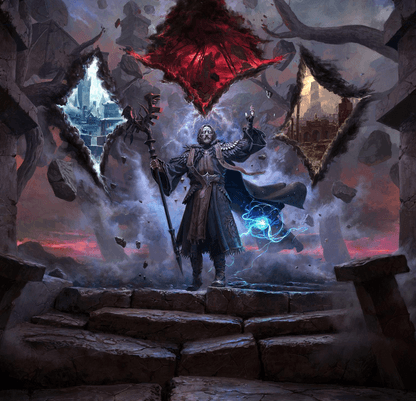
The Converging Paths node further enhances combat accuracy at crucial moments, when enemies are vulnerable to Freeze, Stun, or Shock, allowing the Oracle to trigger Moment of Vulnerability and blend temporal lines of the future and present to strike both simultaneously.
The Oracle ascendancy also adds over 130 additional passive skills to the Druid tree, including The Unseen Path, which grants access to yet-to-be-obtained abilities, such as Self-Sacrificing (which reduces minion Spirit Costs in exchange for increased reserve costs) or Corruption Endures (which guarantees a rare opportunity to ignore death).
What is the New Path of Exile 2: Fate of the Vaal League?
Fate of the Vaal is the expansion's new league mechanic, which takes players back to the height of Vaal civilization, offering a unique experience of customizable dungeon creation.
The league's story pits you against the corruption of Queen Atziri, who is about to sacrifice her empire in pursuit of eternal youth.
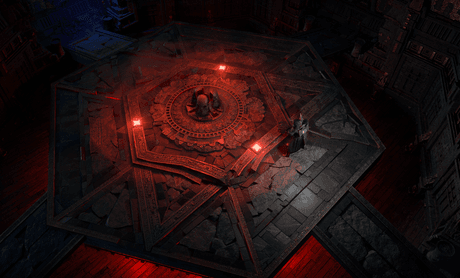
While exploring Wraeclast, you will find Vaal beacons emerging from the ground.
Defeating the evil energy of these beacons and redirecting their essence opens a portal to Vaal Lira, an ancient temple.
How does the Vaal Lira Temple customization work?
The core mechanic of the league involves customizing your incursion into the Vaal Temple, turning the league into a true strategic map-building challenge.
- Beacons and Rooms: Encounters with the beacons unlock access to the temple rooms. You can combine up to six of them to form the layout of your incursion.
- Dynamic Progression: With each incursion, some chambers resist while others are consumed by ruin. The continuous search for beacons allows you to add six new rooms each time, increasing the temple's size, complexity, and reward potential.
- Strategic Positioning: More than a dozen room types are available, each with unique enemies, mechanics, and reward sets. Positioning is crucial. For example, placing a Commander near a Troop Garrison makes the monsters tougher and, consequently, more rewarding.
- Medallions and Corruption: As you explore, you will discover Medallions that alter room behavior, opportunities for double corruption, and experimental Vaal mechanisms, such as the Synthflesh Lab, capable of replacing limbs with mechanical ones to gain special perks during the run.
Fate of the Vaal is a high-risk, high-reward league, requiring the player to carefully plan the layout of their temple to maximize rewards.
What are the New Vaal Item Crafting Mechanics?
The new Fate of the Vaal league focuses on the power of Corruption, introducing specialized crafting tools within the Temple, with unique and unpredictable results.
By defeating the Royal Architect (the guardian of the deepest levels), you gain access to powerful crafting tools, such as:
- Juatalotli’s Triumph: Alters an already corrupted Vaal Unique Item, replacing its modifiers with Vaal-specific variants, opening up new endgame possibilities.
- Precursor Machine: Corrupts Tablets using ancient energy, a central mechanism for the new Abyss system.
- Jiquani’s Triumph: Distorts Soul Cores.
- Kishara’s Acquisition: Attempts to reclaim equipment components, with varied results, adding a layer of risk and reward in recovering rare items.
These mechanics emphasize the high-risk, high-reward philosophy of the Path of Exile universe, allowing players to start corrupting and modifying items early in the league.
Who is the New Pinnacle Boss?
The legendary Queen Atziri, once adored for her beauty, returns as the new and challenging Pinnacle Endgame Boss.
Formerly a Queen who led her devotees to ruin in her quest for eternal youth, Atziri now rises in her most powerful and corrupted form.
Before facing her, you must subdue Xipocado, a devotee of Atziri and guardian of the deepest levels of the temple, who grants access to additional crafting tools.
Defeating Queen Atziri in her corrupted form not only allows you to "rewrite history" of the Vaal but also guarantees an exclusive reward of absurd power.
What is the legendary reward for defeating Atziri?
One of the most coveted rewards for defeating the corrupted form of Atziri is Atziri’s Rule, a new and powerful unique staff.
This staff enhances all corrupted gems and allows players to trade life for increased damage.
In combat, it periodically manifests Mirrors of Refraction across the battlefield. Projectiles fired at these mirrors explode into a fragmented supernova and can propagate from one mirror to the next, drastically amplifying the offensive potential of certain projectile builds. This item promises to be a game changer for characters dedicated to corruption.
What are the Balance and Performance Optimizations?
The The Last of the Druids expansion doesn't just focus on new content; it brings a series of crucial performance optimizations and rebalances that impact the core game experience.
How have performance and visuals been improved?
Grinding Gear Games has significantly focused on CPU load, multithreading, and performance optimization.
Players can expect an increase of at least 25% in frame rate (FPS) and far fewer frame spikes, an improvement that will be particularly noticeable on consoles.
Furthermore, to improve combat clarity and reduce "visual clutter":
- Delirium Fog has been significantly toned down.
- Monster density will no longer increase on higher-tier maps. Instead, difficulty and rewards will be proportional: instead of 40% more monsters, enemies will now provide 40% more items, 40% more experience, and have 40% more life — with the exception of bosses.
- Monster speed modifiers have also been reduced to prevent them from overwhelmingly surrounding players.
This combat clarity is vital. In Path of Exile, survival depends on quick reactions, and any optimization that ensures more stable frames and less visual confusion is a massive victory for the community.
And remember: to maintain those FPS peaks in high-intensity games, optimizing your connection route with NoPing is the perfect complement to the in-game improvements.
What are the changes to skills and items?
The expansion is bringing a massive overhaul to the skill and item system:
- New Support Gems: Over 30 new Support Gems are being introduced, including multiple Lineage Supports. These range from Accelerated Growth (which causes volatile botanical detonations) to Tectonic Slams (with cascading additional hits), opening up new build possibilities for all classes.
- Passive Tree Expansion: The passive skill tree has been expanded with over 250 new passive skills.
- Items and Ascendancies: There are 11 new unique items, 21 reworked Lineage Supports, and nine entirely new additions. In addition to the two new Druid Ascendancies, almost all existing Ascendancies have received balance updates, with some, like the Kitava's Blacksmith, undergoing more substantial revisions.
- Active Skill Rebalancing: More than ninety active skills across all classes have been rebalanced.
Grinding Gear Games is clearly investing in build diversity, ensuring the new class integrates seamlessly into a fresh and renewed game ecosystem.
What happens to Abyss in the Core Game?
The popular Abyss league mechanic will transition to the Path of Exile 2 Core Game, becoming a permanent part of the endgame.
Abysses will remain a permanent endgame mechanic, including Atlas passives and new endgame Tablets. However, Abyss item crafting and Instilling into Waystones have been removed to reduce "unnecessary grind and visual clutter."
To compensate, the modifiers on the Tablets have been significantly enhanced, and after defeating the Arbiter of Ash, players will be able to upgrade Tablets to Rare quality with four modifiers using standard currency.
This change aims to simplify the grind and focus on the most valuable rewards from Abyss encounters.
Path of Exile 2: The Last of the Druids is more than an expansion: it's a defining patch for the endgame and the game experience.
The introduction of the Druid, with its fluid transformations and complex dual ascendancies, combined with the strategic depth of the Fate of the Vaal league and the significant performance optimizations, ensures that December 12 will be a day to mark on the calendar for any ARPG fan.
With new build paths, a revamped item crafting system, and a new Pinnacle Boss to dominate, the potential for hours of gameplay is immense.
And if you are like us and value every frame and every millisecond of latency, remember that NoPing is here to ensure your journey back to Wraeclast is as smooth and fast as possible.