

If you’ve been following the ARPG (action-roleplaying game) scene, you’ve probably wondered: Path of Exile 2 vs Diablo 4, which one should you pick?
Both are ambitious titles in the same genre, but they take different philosophies, systems, and vibes.
In this article I’ll dig into how they compare across many important dimensions, and help you figure out which might suit you better.
Storytelling
Diablo 4
Leans into cinematic storytelling. The world of Sanctuary is richly detailed, and the narrative is front-and-center.
You get cutscenes, voiced dialogue, lore dumps, and more conventional “game story” structure. The narrative here is stronger than in previous Diablo games.
Because its world is open, characters or quest hubs unfold organically, side quests have narrative threads, and exploration sometimes uncovers lore.
The dark, gothic tone is a core identity of Diablo and 4 leans heavily into that.

Path of Exile 2
Takes a more atmospheric, fragmentary storytelling approach. Rather than a constant narrative push, the lore is often delivered via environment, item flavor, NPCs, and smaller cutscenes.
The new campaign spans six acts, and PoE 2 is a more “hard fantasy / dark fantasy” setting where corruption, ancient empires, and the underlying systems of power or curse are central.
Because PoE 2 is still in early access, not all acts are yet fully live: earlier access includes some acts now, with more to come.
Which one you prefer may depend on how much you like story as a driving force versus lore you uncover in pieces.
Combat
Combat is where ARPGs live or die: it’s the meat and potatoes.
Diablo 4
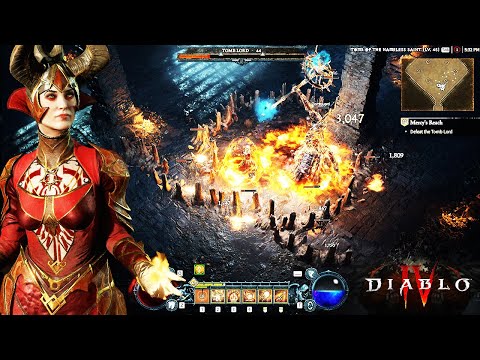
Improves on earlier Diablo titles by making combat more kinetic and responsive, giving every class mobility (dash, teleport, etc.), adding dodge/roll mechanics (so evasion is not passive only).
The pacing is generally fast, with hordes of enemies, ability synergies, and a “feel good” of slicing through demons.
The class identities are strong: your choice of class defines a big part of your style.
Path of Exile 2
Is evolving its combat. Compared to PoE 1, many systems were overhauled. One especially noted change is that skills are no longer tied to gear sockets (you don’t embed your gems into gear in the same way).
PoE 2 also adds a dodge roll mechanic to make combat more dynamic (to avoid “face-tank” builds being dominant).
Another change is the introduction of a third resource: Spirit, alongside Life and Mana. Spirit handles persistent effects like buffs, auras, or summoned entities.
Also, PoE 2 is moving toward more clarity in combos, support gems, and how skills are modified (support gems socketed inside active skill gems, etc.).

In short: Diablo 4 offers polished, immediate, accessible combat, while PoE 2 leans toward depth, build finesse, and more modulation of mechanics.
Leveling
When it comes to leveling — how your character grows from fresh to powerful — both games have different rhythms.
Diablo 4
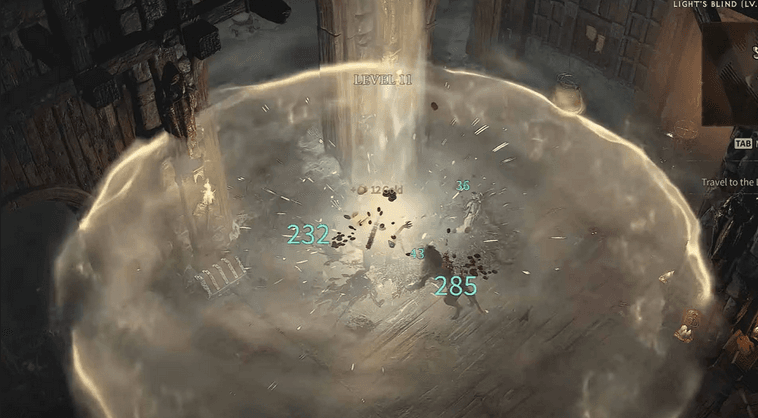
In Diablo 4, leveling is relatively smooth and guided. The campaign takes you through new zones, side quests, dungeons, and events. You gain skill points and attribute/ability progression in a structured way.
There is a “renown” system tied to map exploration and side content that unlocks enhancements.
The system encourages respecs (reallocating points) more freely than in past Diablo games.
Source: Kboosting
Path of Exile 2
In Path of Exile 2, leveling is more classic “grind and depth” style: completing acts, exploring zones, clearing monsters, working toward your build. Because PoE 2 is more complex in skills, there’s more build planning early on.
The depth of customization is higher, and leveling sometimes feels more “deliberate.”
Also, because of how skill systems and support gems are handled, your choices in leveling shape more of your toolkit.
The “dual specialization” mechanic (you can put passive points into two different branches and switch depending on what weapon/skill type is used) is a fresh twist.
Note: early access currently offers only a portion of the full leveling experience (some acts and difficulty modes).
So if you prefer a more guided ramp, Diablo 4 may feel smoother; if you like planning and customization from early on, PoE 2 may appeal more.
Skill Trees
This is a major battleground in the comparison.
Diablo 4
Diablo 4 gives each class a skill tree, branching abilities, and modifiers. By level ~50 you unlock a “Paragon Board” (or equivalent) for deeper customization.
You can respec (change your points) without too harsh penalties, encouraging experimentation.
The tree is robust yet constrained, enough depth to matter, but not overwhelming to casual players.
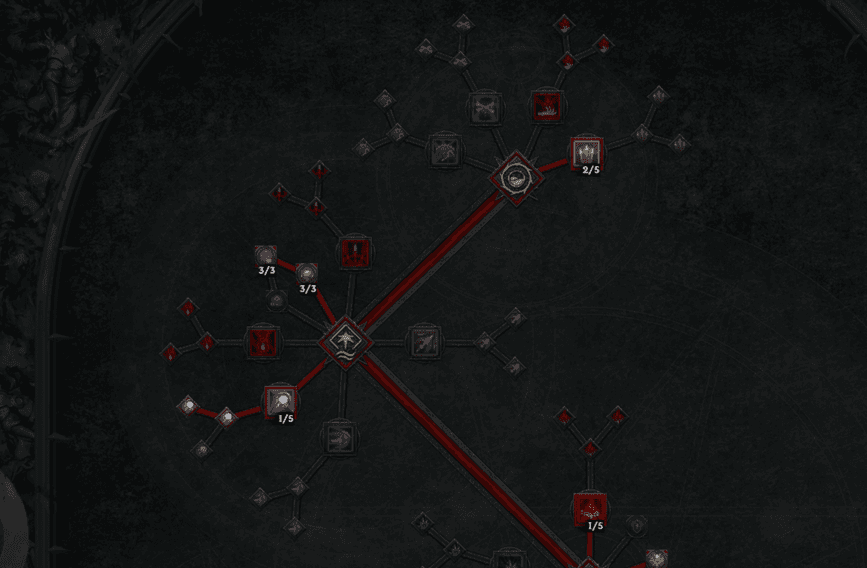
Bone Spirit Skill Tree in Diablo 4. Source: Overgear
Path of exile 2
Path of Exile 2 leans into complexity. It inherits from PoE 1’s philosophy of “build depth as identity.”
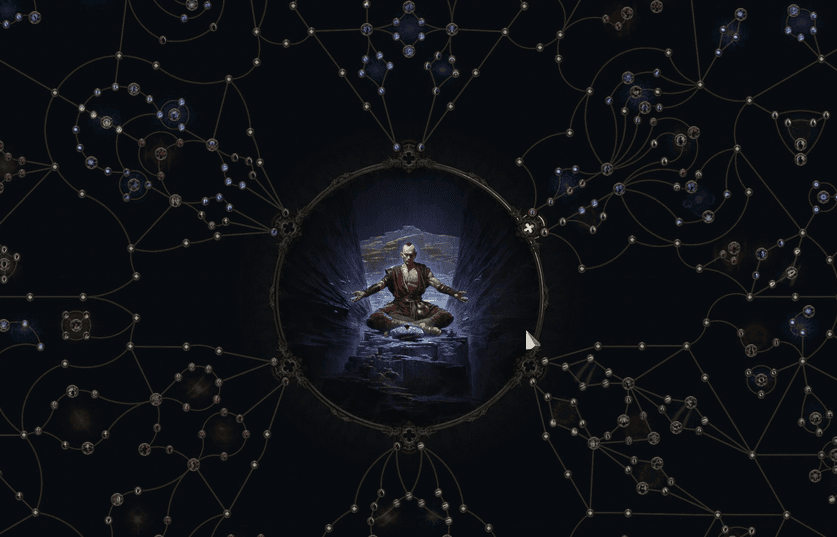
Passive Skill Tree in PoE2, with more than 1500 nodes. Source: X
The passive skill tree returns (with many nodes), and PoE 2 introduces dual specialization (you can invest in two branches, and whichever branch aligns with your current weapon or skill “activates”).
Also there are Ascendancy classes (specializations) per base class, giving further branching of style.
Because the build mechanics are decoupled from gear (i.e. skill gems aren’t bound to gear sockets), you have more flexibility in combining skills/supports.
That said, with great power comes complexity, there’s more room for misbuilds or confusion for newcomers.
If you like exploring many branching possibilities, tweaking your build, and exploring synergy, PoE 2’s skill tree is likely more rewarding. But if you prefer structure, Diablo 4’s tree is more user-friendly and still gives you choices. Anyways, both are enjoyable.
Crafting
Crafting in ARPGs is how you turn loot into powerful gear or customize upgrades. Here’s how the two compare:
Diablo 4
Takes a more streamlined and accessible approach.
The crafting system focuses on upgrading existing gear, imprinting aspects (special powers) onto items through the Occultist, and improving potions and elixirs.
It’s much easier to grasp than PoE’s complex mechanics, and it fits Blizzard’s goal of keeping gameplay fast and rewarding.
However, for players who love deep item theorycrafting, Diablo 4’s crafting might feel a bit shallow compared to Path of Exile 2’s near-limitless customization.
Path of Exile 2
In Path of Exile 2, crafting is one of the deepest and most complex systems in any ARPG.
Almost every item can be modified using a huge range of crafting materials (orbs, essences, fossils, and more) each changing an item’s properties in unique ways.
This system gives players almost total control over item customization, but it also requires a lot of experimentation (and patience).
Understanding crafting in Path of Exile often feels like learning a science — one wrong orb can ruin an item, while the right combination can create something worth a fortune.
PVP
Player versus player is always a sticking point in ARPGs, especially for games that are more design-leaning than pure math.
Diablo 4
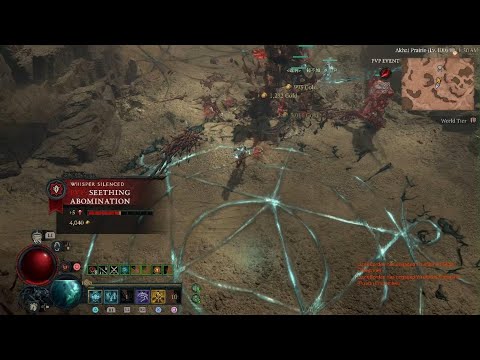
Does include PvP zones (specific map zones or instances where PvP is allowed) rather than full open-world PvP everywhere. This gives players a choice to engage or avoid.
Because balance is tricky (gear disparity, power scaling), PvP is more cautious design in Diablo.
Path of Exile 2
Path of Exile 2’s PvP is less confirmed in the sense of complete systems (because it’s early access).
But historically, the original PoE had “arena” or dueling options. PoE 2 is expected to include PvP or dueling, but it probably won’t be a central focus early on (the emphasis is on PvE, build depth, endgame).

Given the current information, Diablo 4 has clearer PvP zones and support; PoE 2’s PvP is likely to exist but may be less polished initially.
Price
Money matters. Here’s how the two compare:
Diablo 4
Diablo 4 is a premium game: you pay upfront (standard edition, deluxe edition, etc.). After that, many content updates and expansions may be paid or tied to seasons, etc.
Cosmetic microtransactions also exist, though the core gameplay is not locked behind paywalls.
The Diablo 4 expansion Vessel of Hatred extends content, which is another cost.
Path of Exile 2
Path of Exile 2 is in early access currently, and it’s a paid early access model. You need a supporter pack to play during early access.
However, once fully released, the plan is that PoE 2 becomes free-to-play (like its predecessor).
Microtransactions in PoE 2 are largely cosmetic, and the model is that purchases in PoE 1 and PoE 2 will be shared where applicable.
So, in practice, if you jump in now, you pay for access to PoE 2’s early version; but in the long term, PoE 2 aims to be free to play. Diablo 4 is already a premium buy with paid expansions.
Also read: Path of Exile 2: The Third Edict – Release Date and New Features
Endgame
This is where the ARPGs live after you finish the story.
Diablo 4
Diablo 4 offers a robust endgame: you’ll face higher world tiers, dungeons, seasonal content, Paragon progression, repeated challenges, and expansions. Some reviews highlight the endgame as strong and addictive, but some players feel it becomes boring quickly.
Anyways, there’s a flow of seasonal updates, new features, and balancing to keep the endgame alive.
Path of Exile 2
Path of Exile 2 designs the endgame to be deep and challenging. After the six-act campaign, you unlock the map system (over 100 endgame maps) with modifiers, branching paths, boss fights, and revamped past league mechanics.
The “Atlas Passive Skill Tree” (or equivalent) is part of how maps are modified in endgame.
As early access evolves, more mechanics and systems (crafted overlays, modifiers, trade, deeper content) will come.
Diablo 4 already has stronger endgame content currently than PoE 2 in its nascent state.
So: Diablo 4’s endgame is mature, supported, stable. PoE 2’s endgame is ambitious, deep, and growing.
Co-op
Playing with friends is a core feature in ARPGs.
Diablo 4
Supports co-op very well.
You can join with friends, play dungeons, world events, etc.
The shared open world means you’ll often cross paths. It’s designed to be social and cooperative.
Path of Exile 2
Supports co-op up to six players in the campaign.
It also supports cross-play and cross-progression.
An interesting twist: PoE 2 supports couch co-op (on consoles, with controllers) in certain modes, which is a nice touch for local multiplayer.
One nuance: Diablo 4’s world structure sometimes makes it harder to find co-op groups (players complaining about group-finding) whereas PoE 2’s instanced zones and a built group finder can make co-op flow better.
Platform Availability
This is simpler but still important.
Diablo 4
It is available on PC, PlayStation 4/5, and Xbox (One and Series). It’s also on Game Pass.
It supports cross-play and is well-optimized across platforms.
Path of Exile 2
Path of Exile 2 in its early access version is on Windows PC, PlayStation 5, and Xbox Series X / S.
(Note: PS4/Xbox One support is less clear or limited; the initial platform list emphasizes current-gen consoles.)
When fully released, PoE 2 should broaden platform support further.
Also, PoE 2’s controller support is improved (including twin-stick style) especially in console environments.
If you play on older consoles (PS4 / Xbox One), Diablo 4 might currently have stronger support; PoE 2 is more geared toward PC and newer consoles in early access.
Social Mechanics
Beyond co-op, the broader social features of a game matter: guilds, chat, group finder, trading, etc.
Diablo 4
Diablo 4 has guilds/clans, social chat, seasonal “battle pass” communities, etc. The open world allows incidental encounters, world events, shared world bosses, etc. That fosters “being around other people.”
Some complaints: finding a group sometimes relies on chat or clan systems, which may not always be smooth.
Path of Exile 2
Path of Exile 2 is expected to have strong social systems. Early access already includes group finder, instanced zones (so your group isn’t competing with randoms in your path), and more.
Trade is a big social mechanic in PoE ecosystems. In PoE 2, asynchronous trading (selling via NPCs even if you’re offline) is being added (so people can buy items from you even when you’re offline).
Because many microtransactions and cosmetics are shared between PoE 1 and PoE 2, there’s continuity for existing social communities.
If social systems and seamless trading matter to you, PoE 2 is investing heavily there (especially given the legacy of PoE’s trade economy). Diablo 4 is solid but more conventional.
UI
User Interface is often underappreciated but affects daily experience.
Diablo 4
Diablo 4 generally gets praise for being clean, readable, polished, and modern.
The HUD, inventory, skill menus, map overlays, quest logs, etc., are well designed.
Path of Exile 2
Path of Exile 2 is improving from PoE 1’s sometimes cluttered UI. The new gem/skill system unclutters the old “gear socket” model.
Also, because PoE 2 separates skills from gear, and supports better build tools, the UI for customizing builds is more manageable.
With early access, there might be areas of UI still under iteration, and some users may find it less refined than Diablo’s matured UI.
So, if you prefer a smooth, polished interface out of the box, Diablo 4 has an advantage. But PoE 2 is working toward clarity and depth in UI as well.
Art Design
Art and visual identity set mood and tone, and both games have strong aesthetics.
Diablo 4
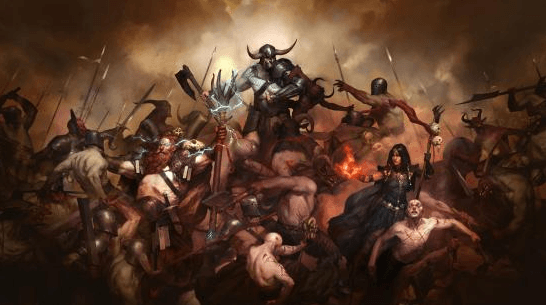
Embraces dark, gothic, grim fantasy. Its art is atmospheric, rich in detail, using lighting, shadows, weather, and world detail to evoke a bleak, haunted world.
The regions are varied: deserts, swamps, frozen lands, ancient ruins. That variety helps video interest in exploring.
Source: PCGamesN
Path of Exile 2
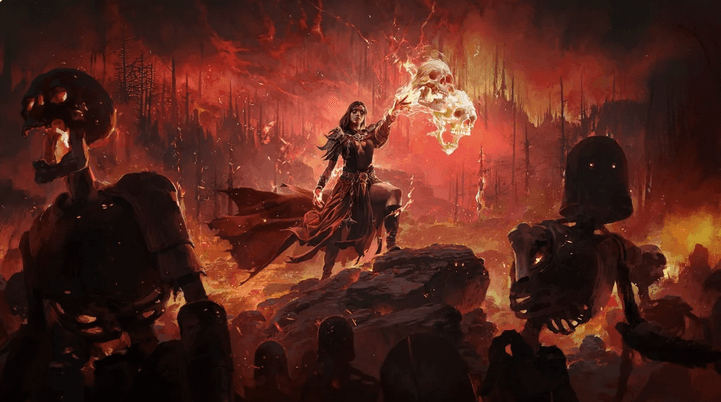
Carries over the gritty, dark-fantasy style from PoE 1 but with upgrades. The environments, monsters, weapon designs, and gloom are strong.
The “corruption” and “ancient empire ruins” themes are visually emphasized.
Because PoE 2 is newer, it can push technical improvements, graphical fidelity, and effects more aggressively in certain cases.
Source: Reddit
In short: both are visually strong in their direction; if you prefer cinematic polish, Diablo 4 may edge ahead. If you like moody, grim, stylized fantasy with strong monster design, PoE 2 holds its own.
Developers (Grinding Gear Games vs Blizzard)
Understanding the studios behind the games gives insight into support, philosophy, and future direction.
Diablo 4
Blizzard Entertainment has been doing Diablo for decades.
They are a large studio, with extensive resources, live service experience (though sometimes controversial), and a track record of large-scale launches and support (warts and all).
Diablo 4 is part of that legacy. Many fans expect Blizzard will continue to support, patch, expand, and monetize with a long lifecycle.
Path of Exile 2
Grinding Gear Games is the studio behind the original Path of Exile and now PoE 2. It’s smaller, more niche, and known for deep systems, community engagement, and more “hardcore” design.
With PoE 2, they are carrying forward the philosophy that microtransactions should be non-pay-to-win and that depth, customization, and community are central.
Because PoE 2 is still early, community feedback plays a huge role in shaping its evolution.
Which One is For You?
Okay, after all that, let’s get practical. Which game might suit you, depending on your preferences?
Choose Diablo 4 if:
- You want a polished, mature ARPG experience with fewer rough edges.
- You like cinematic storytelling, cutscenes, and a more guided narrative.
- You prefer a cleaner UI and more intuitive interface.
- You value stable endgame content, established expansions, and long-term support from a big studio.
- You want cross-platform multiplayer and a solid co-op infrastructure already in place.
- You prefer to avoid very deep build complexity early, and like meaningful choices without overwhelming options.
Choose Path of Exile 2 if:
- You love deep customization, modular build options, and planning your character at a fine level.
- You appreciate strong crafting, itemization, and theorycrafting.
- You enjoy a more hardcore or “diehard ARPG” style, where you dig into synergies, trade, and optimization.
- You like community-driven evolving games (beta/early access) where features grow and change over time.
- You’re okay with some rough edges early, for the promise of more depth and long-term growth.
- You care about strong trading systems, social mechanics, community economies, and elaborate build systems.
In some sense, Diablo 4 is more turnkey: you jump in and it delivers a polished package. PoE 2 is more of a “game in evolution” that rewards investment.
How to Play Both Games Without Lag?
If you want to enjoy both games smoothly, the best solution is to use NoPing.
NoPing optimizes your connection by reducing ping, packet loss, and jitter, giving you a more stable and responsive gameplay experience.
With servers around the world and intelligent routing, NoPing automatically connects you to the fastest path between you and the game server, so you can focus on playing, not lagging.
Here’s how to use NoPing to fix lag in Diablo 4 and Path of Exile 2:
- Sign-up through the website and download NoPing (you can try it for free)
- Open NoPing and search for Diablo 4 or Path of Exile inside the software

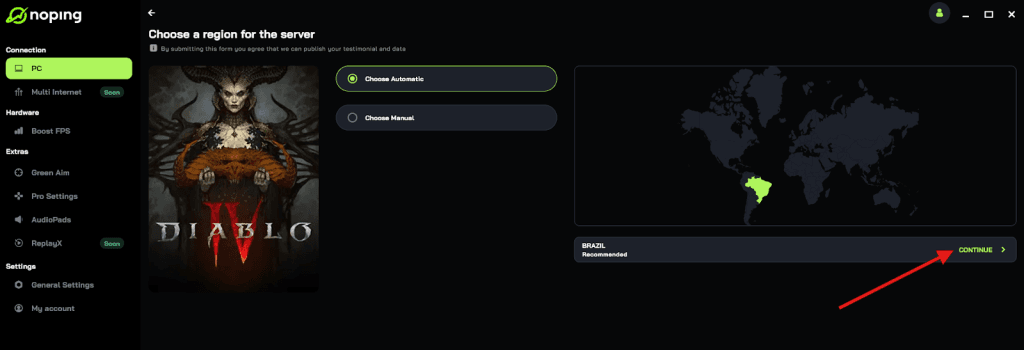
- Once you find Diablo 4 or Path of Exile 2, click on it and, on the next screen, select “Choose automatic” or “Choose manual” and click “Continue”. We recommend choosing automatic, as NoPing’s technology analyzes all routes on a global scale and automatically selects the best option for you.
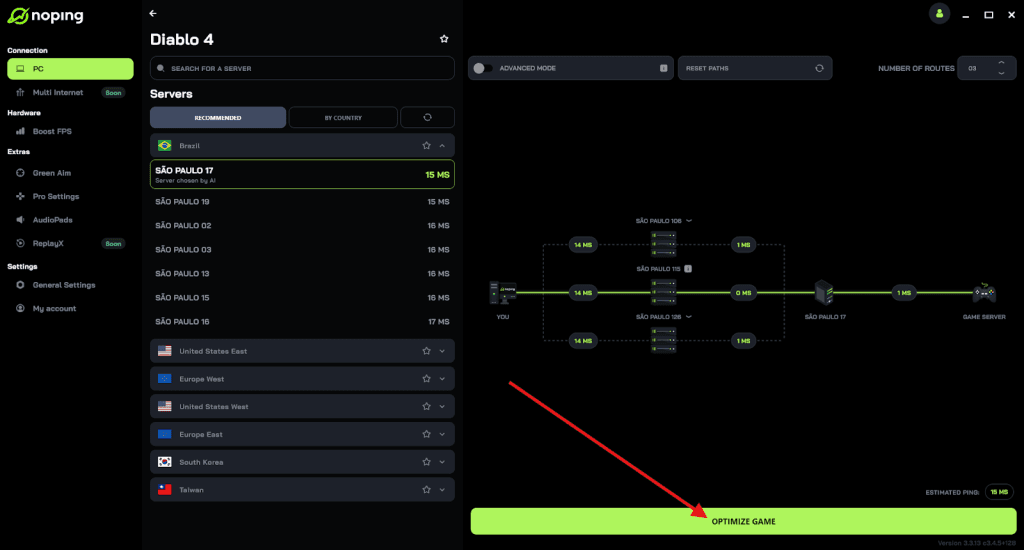
- On the next screen, click on “Optimize Game”.
- And that’s it, you can start playing Diablo 4 and Path of Exile 2 with optimized ping!
You can test different servers within NoPing to see which gives you the lowest latency.